


Make authentic pad thai on the Blackstone griddle with real tamarind, palm sugar, and fish sauce. Easy chicken and shrimp pad thai recipe that beats takeout!
I’ll be honest with you: before this recipe, I had never made pad thai. I had never even eaten it. It’s just not something I’d ever order. Six years of griddle cooking on YouTube and we had never once touched it. So we did what we always do when we step outside our comfort zone. We did our homework.
My wife Amy and I researched dozens of authentic pad thai recipes to figure out what ingredients kept showing up. We ordered pad thai from the highest-rated Thai restaurant near us. We bought a jarred pad thai sauce and a boxed microwave pad thai dinner from the grocery store. Then we tasted them all side by side so we had a real foundation of flavor before we ever turned on the griddle. We even made a date night out of it and drove down to the Asian supermarket for authentic ingredients straight from Thailand.
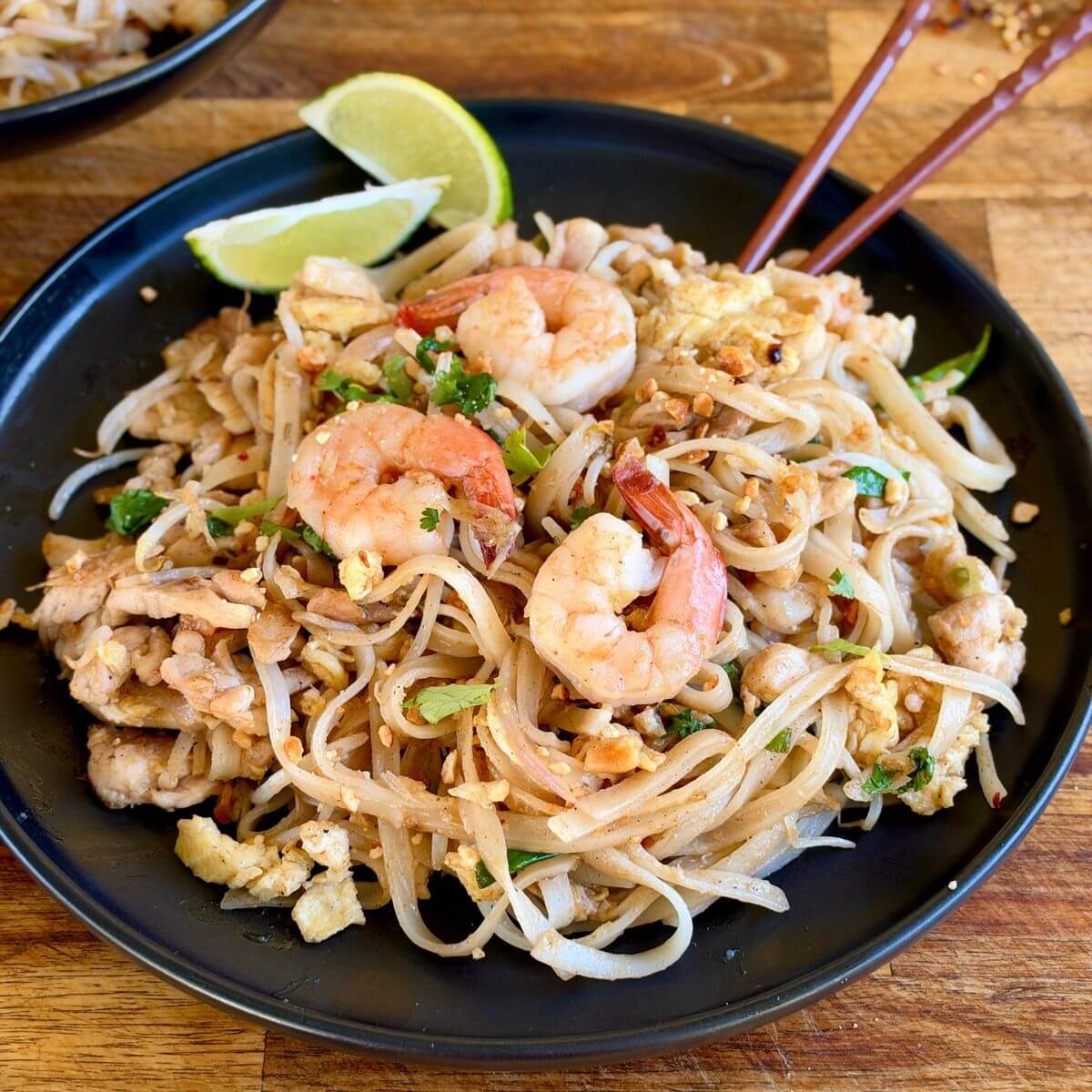
What came out of all that is this griddle pad thai recipe. It has a tang from real tamarind, a bright, zesty citrus finish, and not too much sweetness. The sauce clings to every noodle without drowning it. It is perfectly balanced and delicious. If you love Thai food, you’ve got to give this recipe a try.
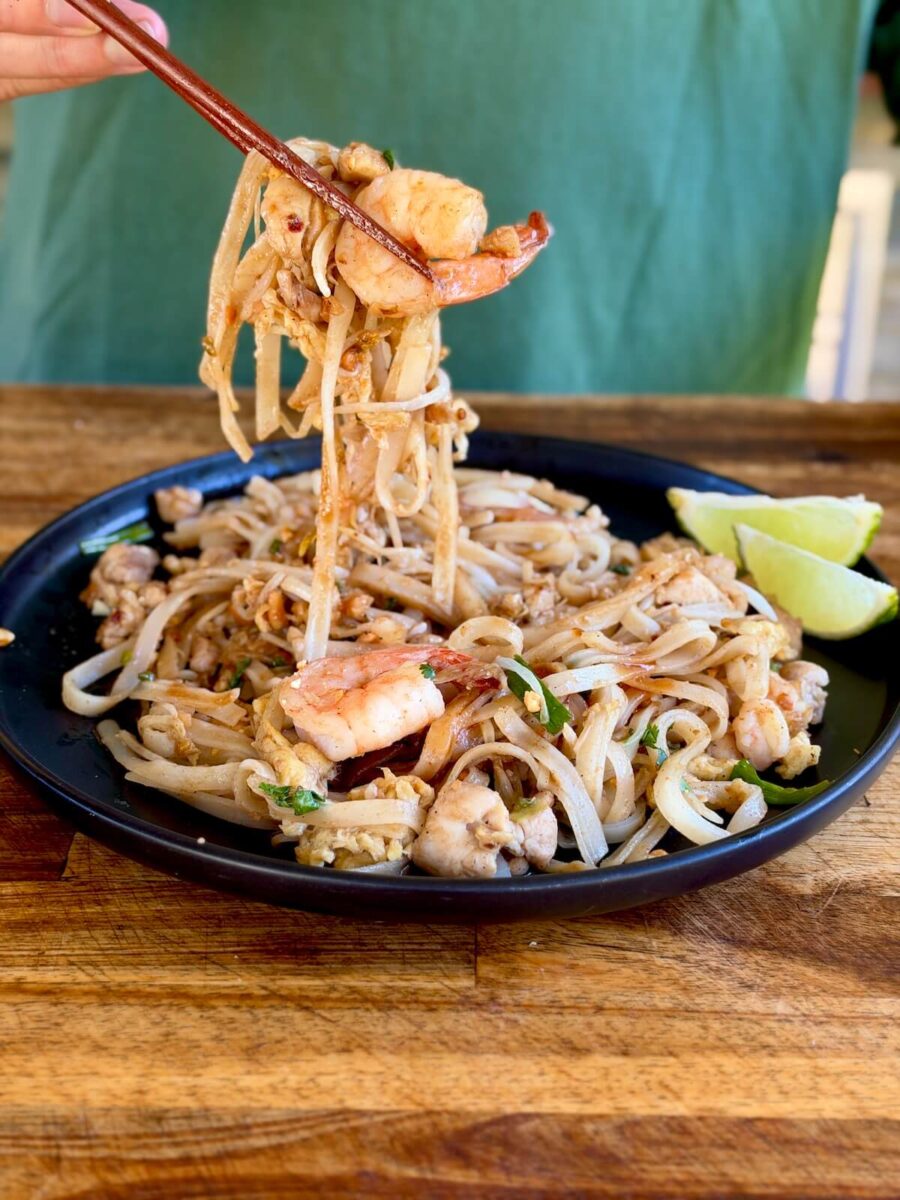
Why You’ll Love this Recipe
- All real ingredients. No bottled sauce, no shortcuts. Just tamarind, palm sugar, and fish sauce doing the heavy lifting.
- Perfectly balanced flavor. Tangy, a little zesty, with just enough sweetness and a gentle kick.
- Made for the griddle. Using heat zones lets you cook the aromatics, noodles, eggs, and proteins all at once on the griddle.
- Not overly saucy. The noodles hold onto the sauce instead of swimming in it.
- Easy to customize. Dial the heat up or down, and add as much chicken and shrimp as you want.
- Takeout quality at home. We put ours right next to the restaurant version and the store-bought options, and it held its own every time.
The 3 Components for Authentic Pad Thai Sauce
After all our research, authentic pad thai sauce comes down to three ingredients: tamarind, palm sugar, and fish sauce. We use them in equal parts, 3 tablespoons each. Some recipes for authentic Pad Thai sauce use slightly more tamarind than fish sauce, some vice versa. But we thought our ratio was fantastic.
1. Tamarind Paste (The Must-Have)
If you take one thing from this post, let it be this: tamarind is the number one ingredient in really good pad thai. It’s what gives the dish its signature tang. It comes from the pod of a tropical fruit, and you’ve probably had it without knowing it, because it’s a common ingredient in Worcestershire sauce.
Here’s the funny thing about tamarind. It smells like a raisin, it looks like a sticky brown brick, and it tastes like neither. Once it’s reconstituted, it tastes bright and limey, almost like a sour plum or an adult sweet-and-sour candy without too much sweet.
You can buy ready-made tamarind paste or concentrate, but we bought a wet seedless tamarind block similar to this one from the Asian market. It’s packed with fibers, so you have to pull the pulp out yourself. Here’s how:
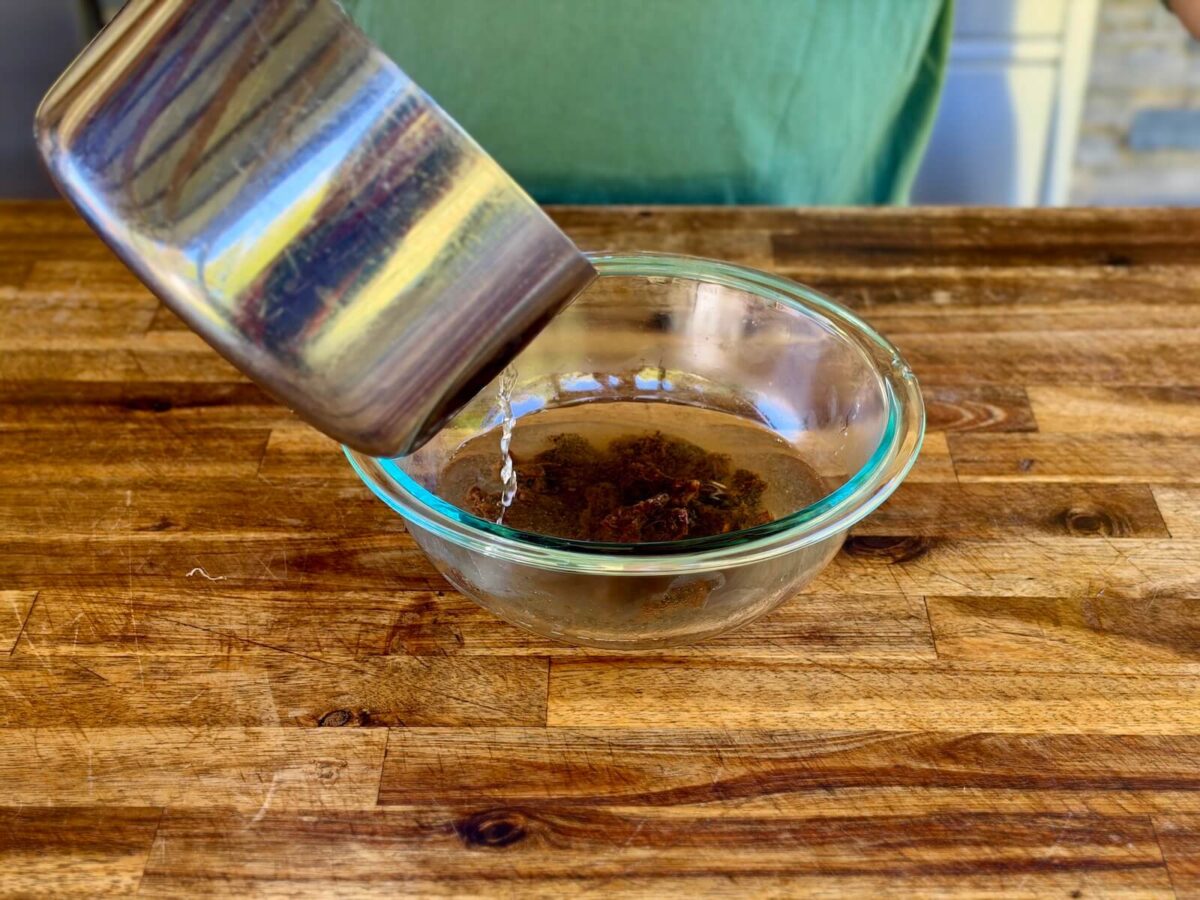
- Break off what you need. For 3 tablespoons of paste, pull off a chunk a little larger than that, about 1/4 to 1/3 cup’s worth, since you lose some to the fibers. Tear it into small pieces.
- Cover it with boiling water. Place the pieces in a heatproof bowl and pour just enough boiling water over them to cover.
- Let it soak 20 to 30 minutes. This is a great time to slice your proteins and prep your vegetables.
- Work the pulp loose. Once the water is cool enough to touch, squish and massage the tamarind with your fingers to separate the soft pulp from the stringy fibers. If it’s too thick to work, add a splash more hot water.
- Strain it. Press the mixture through a fine-mesh strainer with the back of a spoon, scraping the thick paste off the underside. Throw away the fibers and any bits left behind. What you keep should be about the thickness of applesauce.
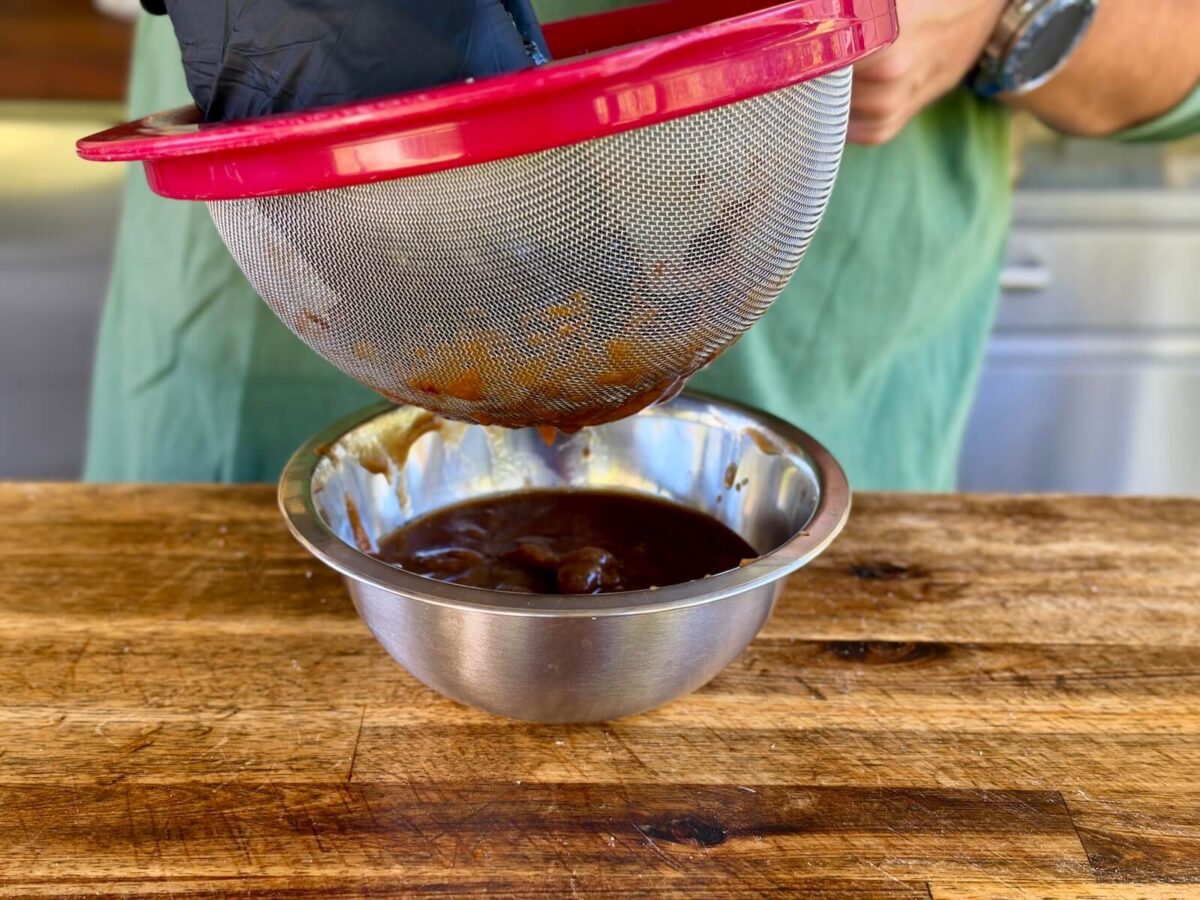
Wrap the rest of the block tightly. It keeps for a long time.
2. Palm Sugar
Palm sugar brings the sweetness that balances the sour tamarind and salty fish sauce. It has a deeper, caramel-like flavor than white sugar. The kind we found at our local Asian supermarket was a soft paste, not granules, so it melts right into the sauce. If you can’t find it, light or dark brown sugar is a good substitute.
3. Fish Sauce
Fish sauce is the salty, savory backbone of the whole dish. It smells strong straight from the bottle, but once it’s mixed with the tamarind and palm sugar, it turns into deep, rounded flavor. Don’t skip it and don’t fear it.
How to Make Pad Thai on the Griddle
Prep Your Ingredients
Pad thai cooks fast, so have all of your ingredients prepped and ready to go before turning on the Blackstone griddle. Timing with the noodles matters here. I like to start soaking the tamarind first, since it takes a full 20-30 minutes. Most of the prep work can be finished in that time.
Here’s a look at the prep involved:
- Slice the chicken. Thinly slice the chicken thighs against the grain. Don’t trim the fat. That’s where the flavor lives.
- Prep the shrimp. Slice about half the shrimp into thin pieces. These cook right into the noodles and spread shrimp flavor through every bite. Keep the other half whole for topping.
- Prep the aromatics. Slice the shallot, mince the garlic, and slice the green onions, keeping the whites and greens separate. Beat the eggs.
- Soak the noodles. Prepare the rice noodles according to the package directions, then drain them.
- Make the tamarind paste. Follow the instructions above. Once the water is cool enough to handle, squeeze the pulp free of the fibers and press it through a fine-mesh strainer. Measure out 3 tablespoons of paste.
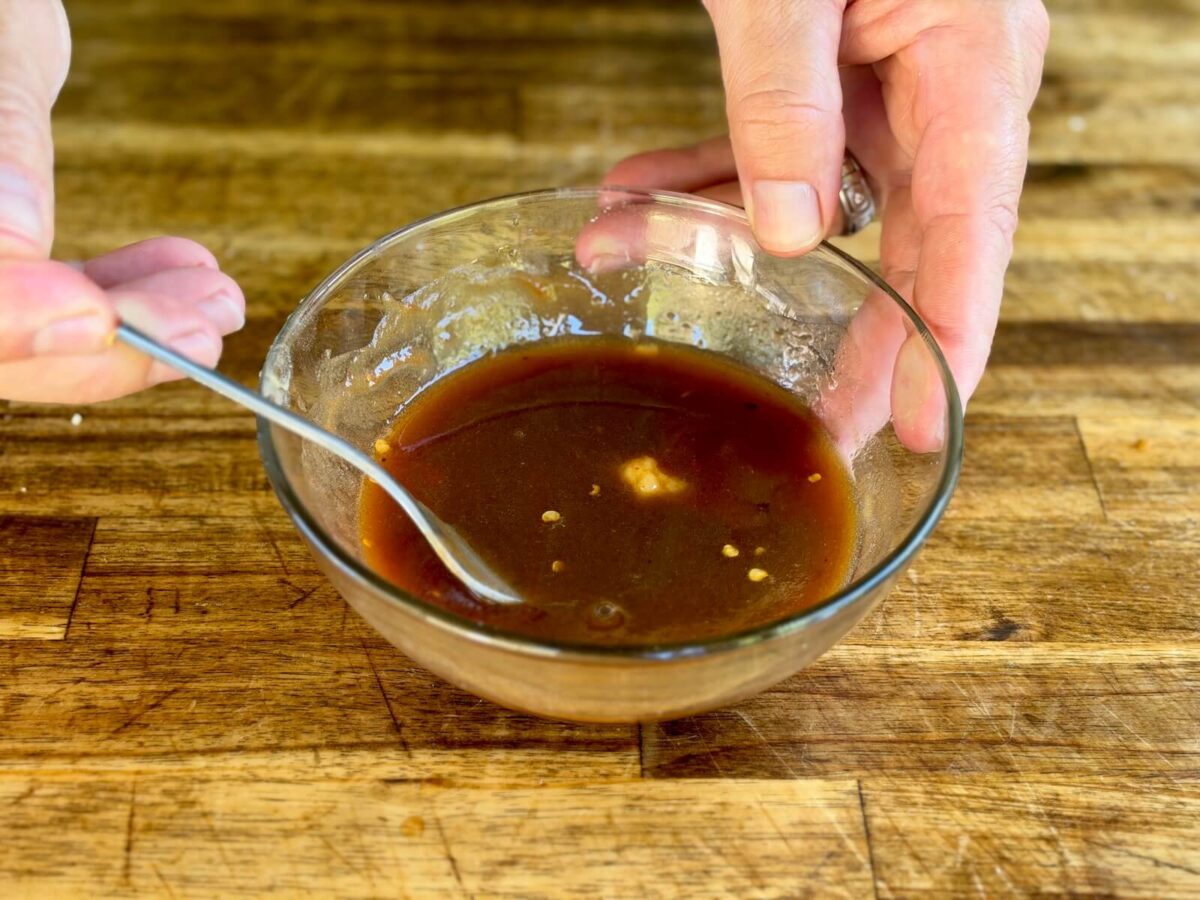
- Mix the sauce. Whisk together the tamarind paste, fish sauce, palm sugar, sriracha, and red pepper flakes until the palm sugar dissolves. Taste it. It should be tangy, salty, and lightly sweet.
Turn on the Blackstone and Start the Chicken
Once all of the ingredients are prepped, heat your Blackstone griddle, making use of the different burners and heat zones. Turn one side of the griddle off to act as a cooler zone, if needed so you don’t overcook the noodles or your proteins. Turn the next burner to low, and the center burner to a medium heat.
Add a small bit of oil to the medium heat zone, and start cooking the thinly sliced chicken thighs. Spread the thighs out so that you get a bit of sear.
Add the Noodles to the Griddle
While the chicken cooks, add a very small amount of oil to the low heat zone, and add the cooked noodles. Spread them out a bit so they are evenly coated in the oil. Then make a small “well” in the center, just like you would for Blackstone fried rice, and add the garlic, shallot, and whites of the green onions. Allow them to cook about a minute to become fragrant, then mix in to the noodles.
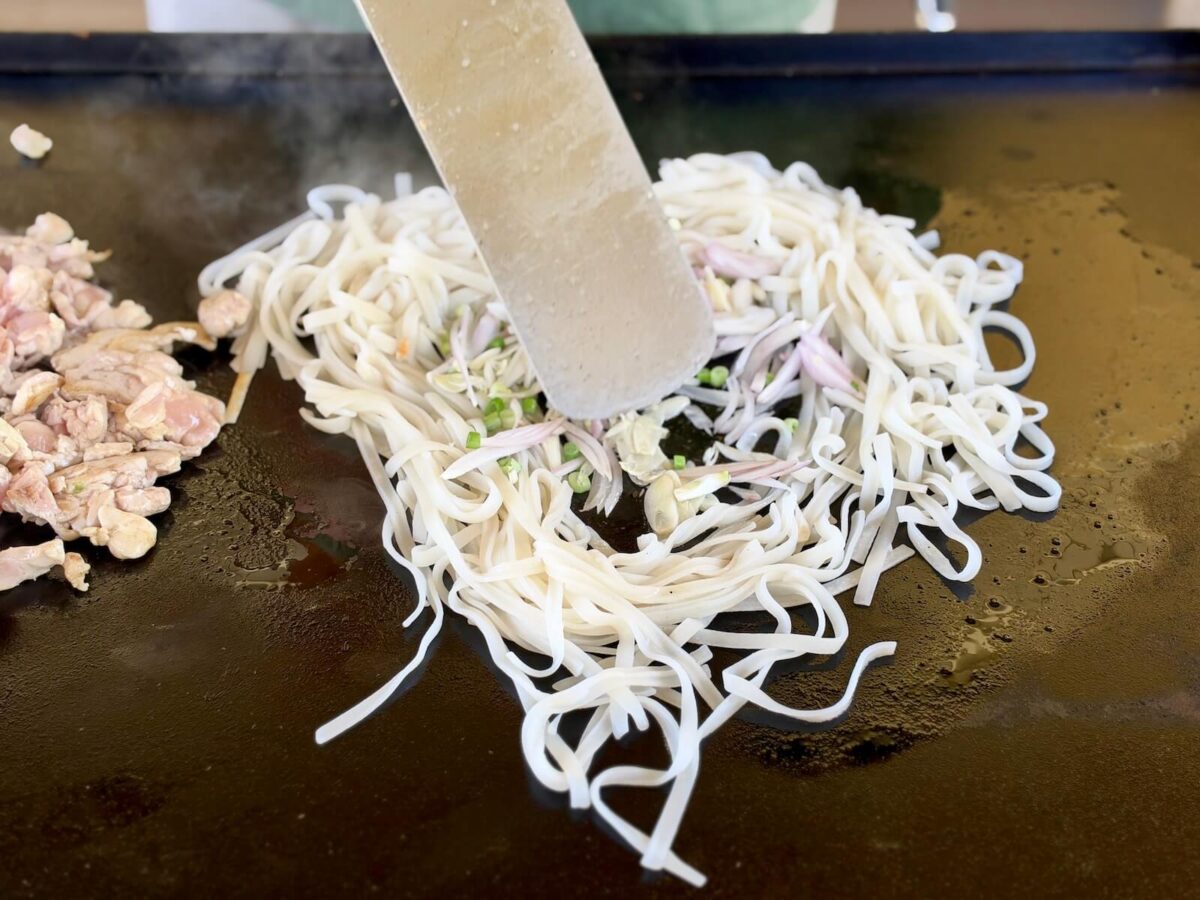
When the chicken is almost completely cooked through, add to the noodles. Mix so that everything is evenly combined.
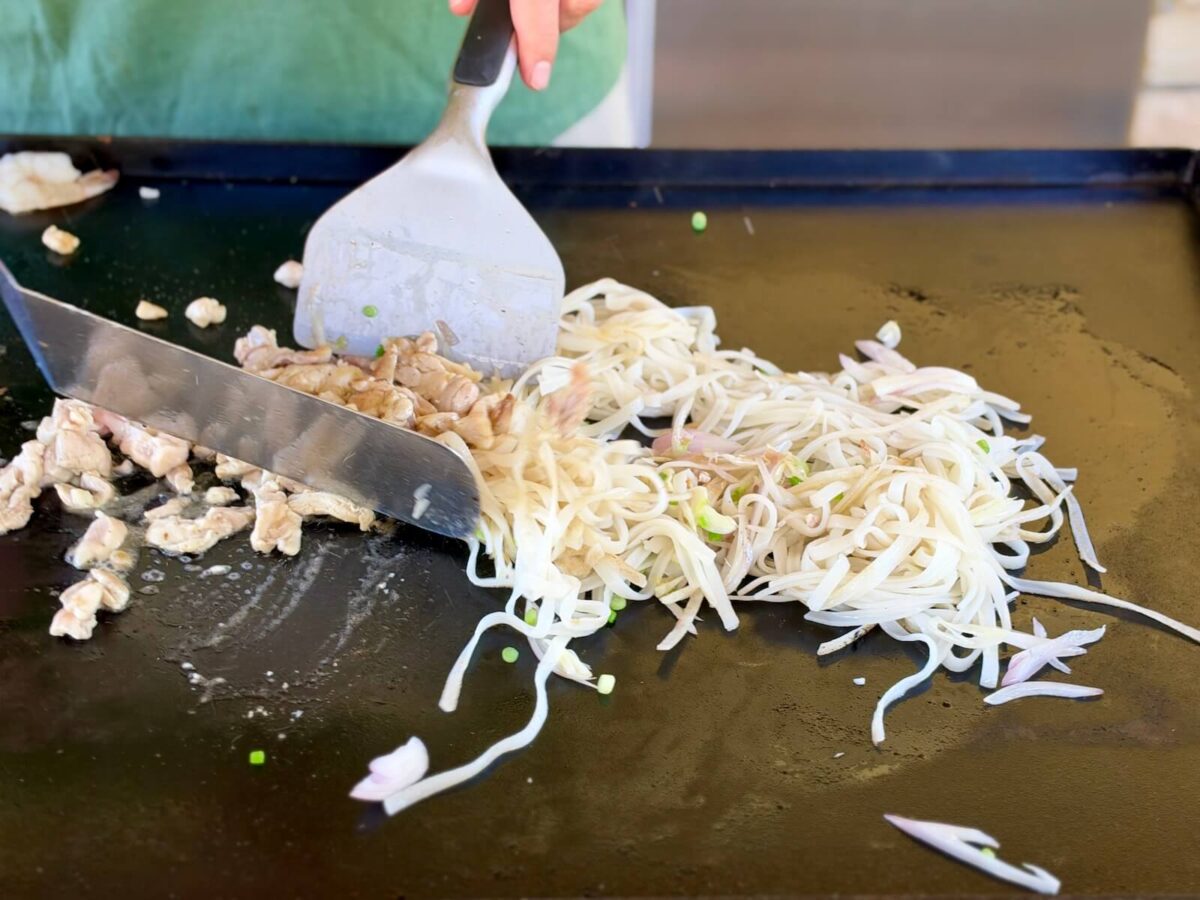
Add the Shrimp, Bean Sprouts, and Eggs
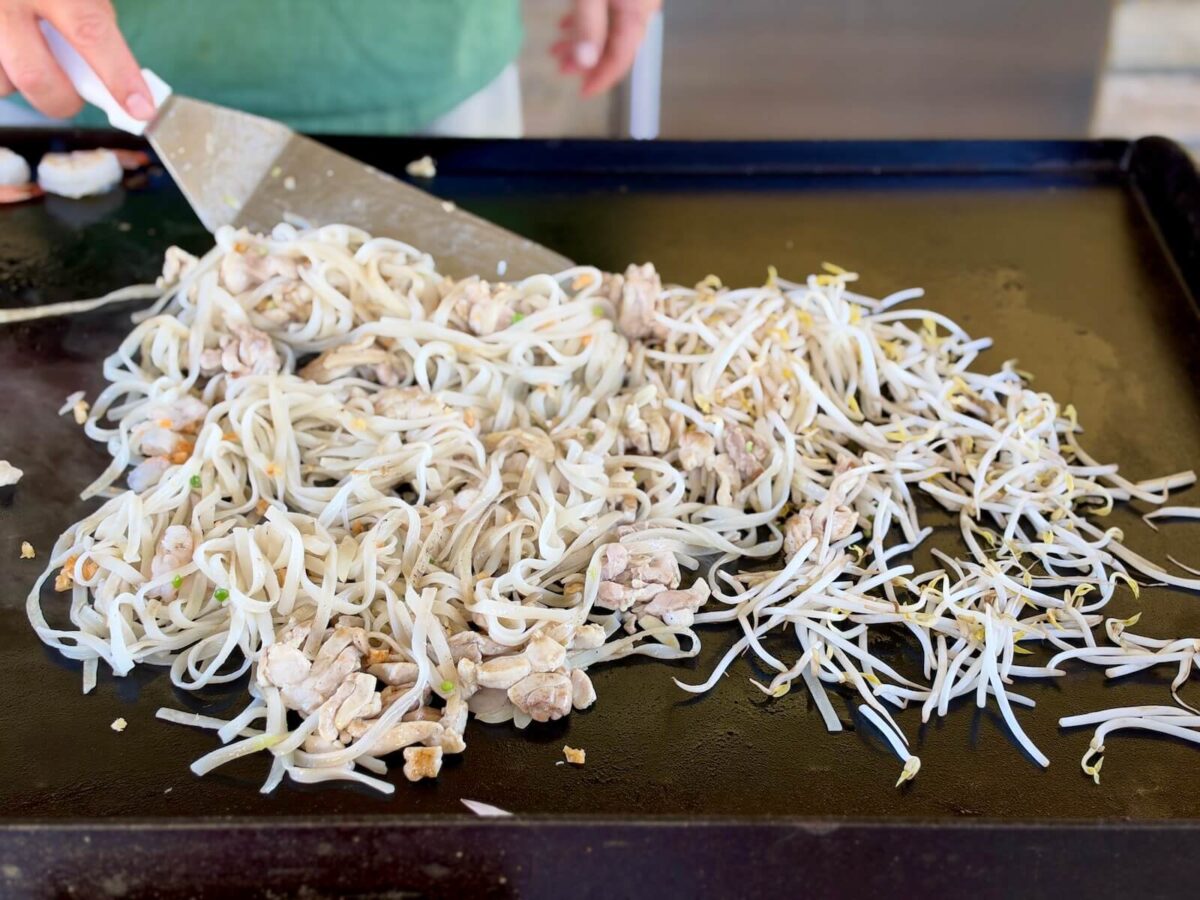
Add the thin-sliced raw shrimp to the griddle to cook. In a separate area, begin cooking the bean sprouts just until they’re warmed through. Cook the whole shrimp on the hotter zone until pink, about 1 to 2 minutes per side.
Next, pour the beaten eggs on the griddle, scramble, and chop. When the eggs are done cooking (should only take about 1 minute), add to the noodle mixture.
Add the Pad Thai Sauce
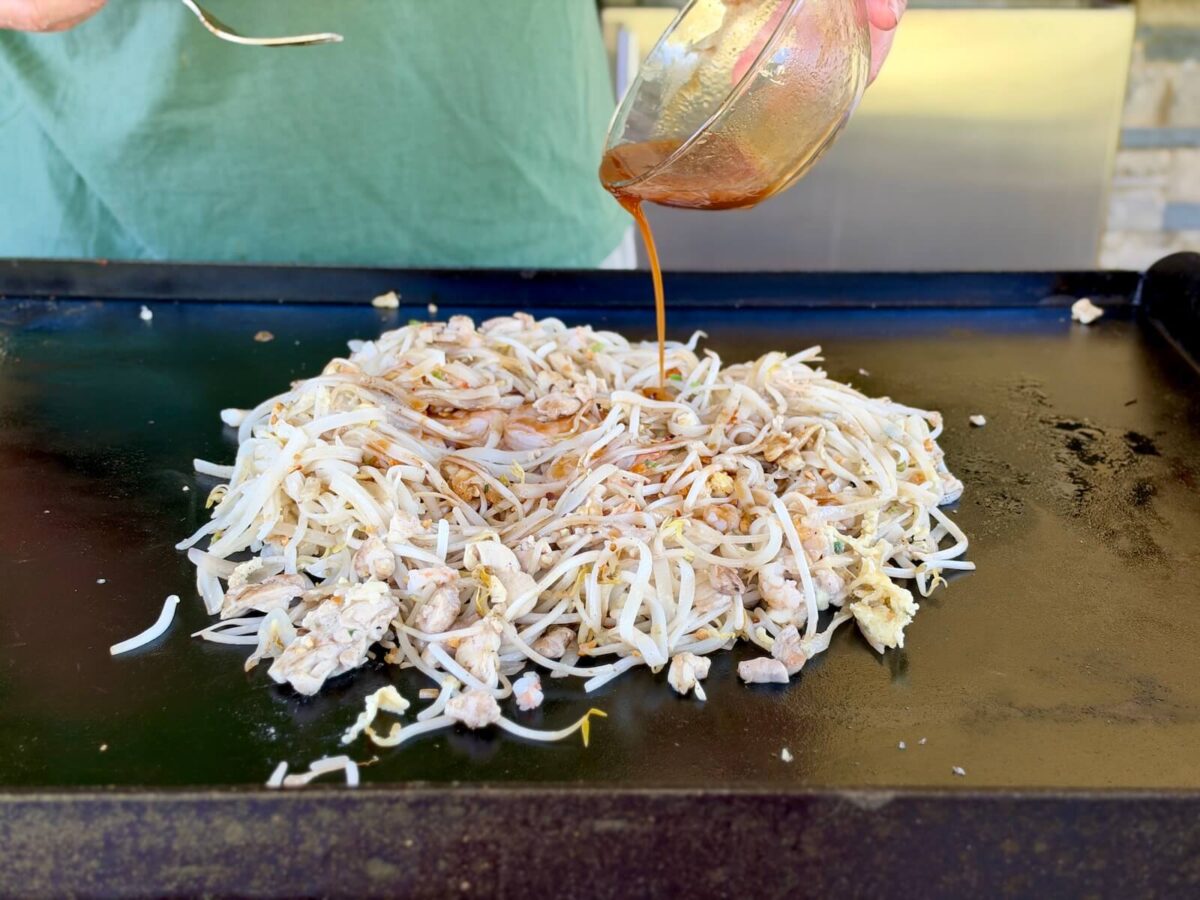
Add about half of the chopped peanuts to the noodles, and mix briefly to combine. Then spread the noodles out in an even layer on the griddle. Give the sauce a good stir to redistribute any sugars that may have settled to the bottom of the bowl. Then pour the pad thai sauce evenly over the noodles. Toss everything until evenly coated.
Garnish and Serve
Gently toss the pad thai on the griddle, so that all ingredients and the sauce are evenly combined. Then toss in the green onion tops and a little cilantro, if using, and let them warm through for a few seconds.
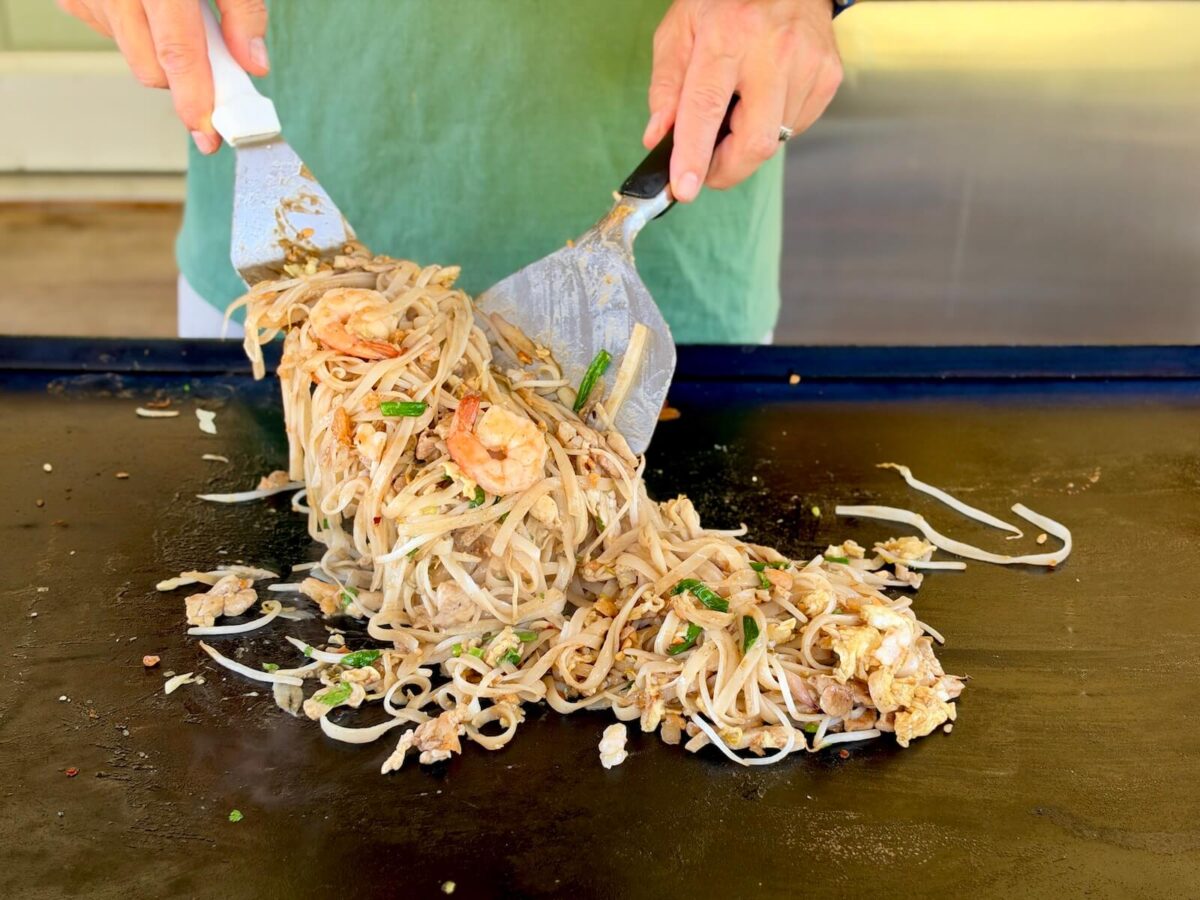
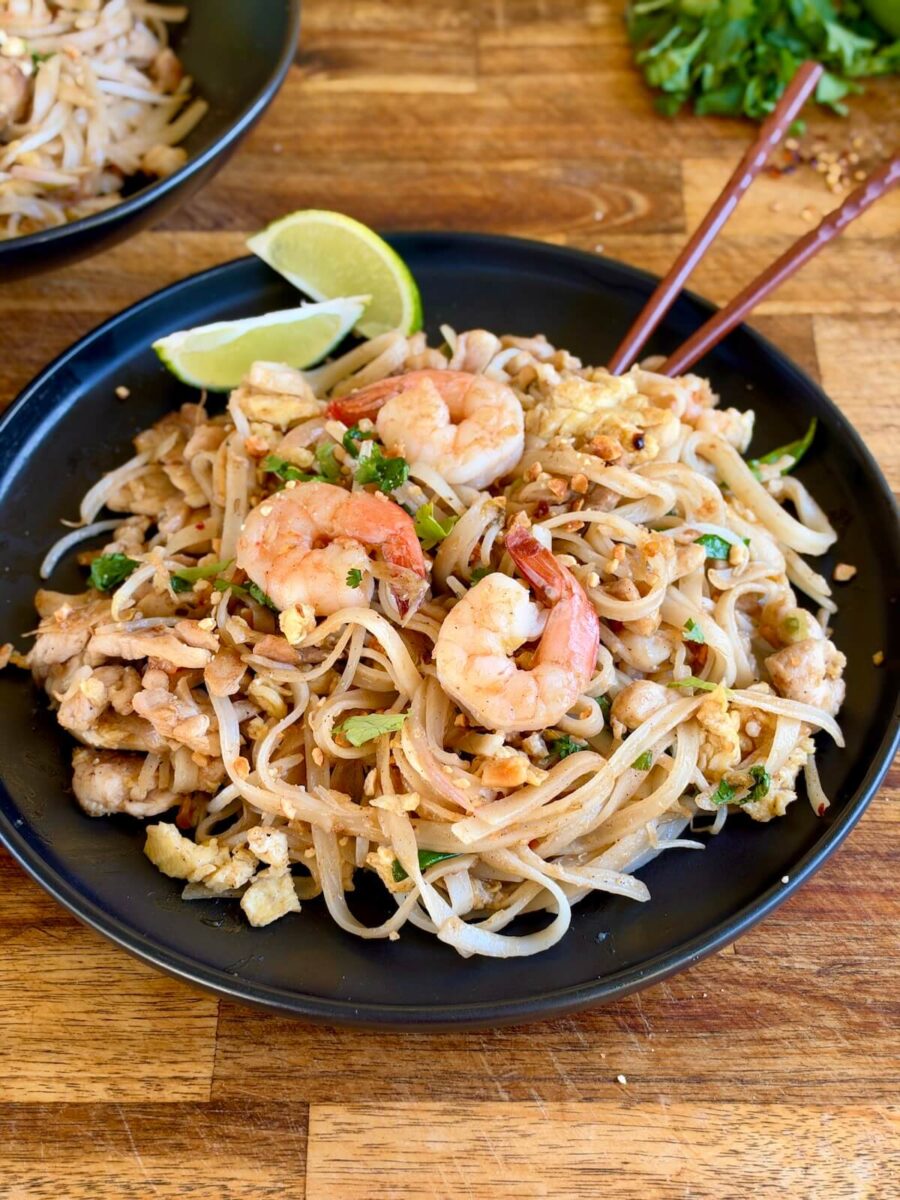
Transfer your Blackstone pad thai to serving plates, and top with the whole shrimp, the remaining peanuts, and a sprinkle of chile flakes if you want more heat. Serve with lime wedges to squeeze over right before you dig in.
Recipe Tips
Use the soak time wisely. The tamarind needs 20 to 30 minutes in hot water. Start it first and do all your slicing and chopping while it sits.
Keep the noodles on low. Rice noodles go from perfect to mushy fast. The low zone gives you control, and a few dark crispy spots add great texture.
Short on time? A store-bought pad thai sauce gets you close. Just know the jarred one we tried was about $10 for a small container and included tomato paste, which you won’t find in a traditional pad thai sauce.
Slice some shrimp thin. Cooking shrimp separately keeps the flavor in the shrimp. Thin-sliced raw shrimp tossed into the noodles spreads that flavor through the whole dish. Keep a few whole for a nice topping.
Frequently Asked Questions
You can, but it won’t taste like authentic pad thai. Tamarind is what gives the dish its signature tang. In a pinch, rice wine vinegar can stand in for some of the sourness.
Brown sugar is the easiest substitute. Use the same amount.
Absolutely. Chicken breast, pork, beef, or tofu all work. Slice them thin so they cook quickly on the griddle.
Yes. Work in batches so you don’t crowd the pan, cooking the proteins first and setting them aside before the noodles.
Not traditionally. Some restaurant and jarred versions add tomato paste or ketchup, which turns the sauce pink or red. Authentic tamarind-based sauce is a rich brown.
Authentic Pad Thai on the Blackstone Griddle
Ingredients
For the Pad Thai Sauce:
- 3 tablespoons fish sauce
- 2 tablespoons palm sugar or substitute brown sugar
- 3 tablespoons tamarind paste *see notes
- 2 teaspoons sriracha
- ¼ teaspoon red pepper flakes
For the Noodles:
- 8 oz dried rice noodles *see notes
- ½ – ¾ lb boneless skinless chicken thighs about 2 thighs, thinly sliced against the grain
- ½ lb shrimp peeled and deveined
- 4 cloves garlic minced or thinly sliced
- ¼ cup dried shrimp medium-sized, rough chopped (optional)
- 1 shallot thinly sliced
- 2 eggs beaten
- 2 cups mung bean sprouts
- ⅓ cup chopped roasted peanuts for tossing and topping
- 3 green onions sliced, whites and greens separated
- ¼ cup fresh cilantro rough chopped (optional)
- neutral cooking oil as needed
- lime wedges or dried chili flakes for serving (optional)
Instructions
- Make the tamarind paste. If using a wet seedless tamarind block, tear about 1/4 to 1/3 cups' worth into small pieces and add to a medium bowl. Pour in just enough boiling water to cover, and soak 20 to 30 minutes. Once cool enough to handle, squeeze the pulp away from the fibers in the water. Then press through a fine-mesh strainer to remove the fibers. What you have left should resemble an applesauce-type thickness. Measure out 3 tablespoons of the prepared paste.
- Prep the proteins. Thinly slice the chicken against the grain. Slice about half of the shrimp into very thin pieces, and leave the rest whole.
- Prepare the noodles. Soak or cook the rice noodles according to package directions, then drain.
- Heat the griddle. While the noodles cook, preheat the griddle. Set one zone to medium, one to low, and leave one off as a resting area.
- Make the sauce. While the noodles are cooking, whisk the tamarind paste, fish sauce, palm sugar, sriracha, and red pepper flakes in a medium bowl until the palm sugar dissolves.
- Cook the chicken. Add a little oil to the medium zone and cook the chicken until browned and almost all the way cooked through, about 4 to 5 minutes.
- Cook the aromatics. On the low zone, add a small bit of oil to lubricate the cooking surface. Then add the drained noodles. Spread out in an even, thin layer and make a "well" in the center. Cook the shallot, green onion whites, and garlic in the middle of the noodles until fragrant, about 1 minute.
- Add the noodles. Toss the fragrant garlic, shallot, and green onion whites with the noodles. When the chicken is almost done, fold into the noodles.
- Add the shrimp and sprouts. Add the thinly sliced raw shrimp to a clear area on the griddle to cook about 1-2 minutes. Then toss the chopped dried shrimp (if using) and the thin-sliced shrimp into the noodles. Place the bean sprouts on the griddle to soften slightly. Then toss the bean sprouts with the noodle, shrimp, and chicken mixture.
- Cook the whole shrimp. Cook the whole shrimp on the medium zone until pink, 1 to 2 minutes per side. Set the whole shrimp aside for garnishing.
- Add the eggs. Pour the beaten eggs onto the low heat side of the griddle. Scramble, chop, and fold into the noodles.
- Add the peanuts. Mix about half of the peanuts into the noodles.
- Sauce the noodles. Stir the sauce well to redistribute any sugars that sunk to the bottom, then pour it over the noodles. Toss until evenly coated.
- Finish. Add the green onion greens and cilantro, if using, and toss for a few seconds.
- Serve. Top with the whole shrimp, the remaining peanuts, and chile flakes if desired. Serve with lime wedges.
Notes
- For the tamarind paste – We used a block of tamarind from the Asian supermarket labeled as “wet seedless tamarind”. It was a very thick and sticky brick-like shape. Most authentic pad thai recipes recommend this type of tamarind that has be be boiled and strained. We have not tested the pre-made bottled concentrates or other forms of the tamarind.
- For the noodles – Look for flat rice noodles, often labeled “rice stick” or pad thai noodles. Prepare according to package instructions, but reduce the cooking time by about 1 minute.
- For the dried shrimp – Medium-sized, rough chopped. This adds a deep, savory shrimp flavor throughout the noodles. This is one of the more expensive ingredients in authentic pad thai, so you can omit it and substitute more raw shrimp that are very thinly sliced. You will get a similar flavor and slicing the shrimp thin allows more distribution throughout the noodles.
That’s our version of pad thai. I’m sure somebody will tell me I left out their favorite ingredient, but we did our due diligence and I’m proud of this one. Give it a try and let me know what you think.
And be sure to PIN this post for later if you’re a Pinterest user. This is a great way to support us!


Get More Griddle Recipes!
Follow The Flat Top King on YouTube for more recipes and tips for mastering your griddle!