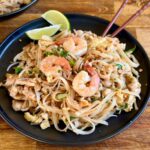
Authentic Pad Thai on the Blackstone Griddle
This authentic griddle pad thai is built on a simple sauce of tamarind, palm sugar, and fish sauce. It comes out tangy, savory, and lightly sweet, with a bright citrus finish. Chicken thighs, shrimp, rice noodles, eggs, and crunchy bean sprouts all cook together on the griddle. It's restaurant-quality pad thai you can make at home, with no bottled sauce required.
Servings: 4 people
Ingredients
For the Pad Thai Sauce:
- 3 tablespoons fish sauce
- 2 tablespoons palm sugar or substitute brown sugar
- 3 tablespoons tamarind paste *see notes
- 2 teaspoons sriracha
- ¼ teaspoon red pepper flakes
For the Noodles:
- 8 oz dried rice noodles *see notes
- ½ - ¾ lb boneless skinless chicken thighs about 2 thighs, thinly sliced against the grain
- ½ lb shrimp peeled and deveined
- 4 cloves garlic minced or thinly sliced
- ¼ cup dried shrimp medium-sized, rough chopped (optional)
- 1 shallot thinly sliced
- 2 eggs beaten
- 2 cups mung bean sprouts
- ⅓ cup chopped roasted peanuts for tossing and topping
- 3 green onions sliced, whites and greens separated
- ¼ cup fresh cilantro rough chopped (optional)
- neutral cooking oil as needed
- lime wedges or dried chili flakes for serving (optional)
Instructions
- Make the tamarind paste. If using a wet seedless tamarind block, tear about 1/4 to 1/3 cups' worth into small pieces and add to a medium bowl. Pour in just enough boiling water to cover, and soak 20 to 30 minutes. Once cool enough to handle, squeeze the pulp away from the fibers in the water. Then press through a fine-mesh strainer to remove the fibers. What you have left should resemble an applesauce-type thickness. Measure out 3 tablespoons of the prepared paste.
- Prep the proteins. Thinly slice the chicken against the grain. Slice about half of the shrimp into very thin pieces, and leave the rest whole.
- Prepare the noodles. Soak or cook the rice noodles according to package directions, then drain.
- Heat the griddle. While the noodles cook, preheat the griddle. Set one zone to medium, one to low, and leave one off as a resting area.
- Make the sauce. While the noodles are cooking, whisk the tamarind paste, fish sauce, palm sugar, sriracha, and red pepper flakes in a medium bowl until the palm sugar dissolves.
- Cook the chicken. Add a little oil to the medium zone and cook the chicken until browned and almost all the way cooked through, about 4 to 5 minutes.
- Cook the aromatics. On the low zone, add a small bit of oil to lubricate the cooking surface. Then add the drained noodles. Spread out in an even, thin layer and make a "well" in the center. Cook the shallot, green onion whites, and garlic in the middle of the noodles until fragrant, about 1 minute.
- Add the noodles. Toss the fragrant garlic, shallot, and green onion whites with the noodles. When the chicken is almost done, fold into the noodles.
- Add the shrimp and sprouts. Add the thinly sliced raw shrimp to a clear area on the griddle to cook about 1-2 minutes. Then toss the chopped dried shrimp (if using) and the thin-sliced shrimp into the noodles. Place the bean sprouts on the griddle to soften slightly. Then toss the bean sprouts with the noodle, shrimp, and chicken mixture.
- Cook the whole shrimp. Cook the whole shrimp on the medium zone until pink, 1 to 2 minutes per side. Set the whole shrimp aside for garnishing.
- Add the eggs. Pour the beaten eggs onto the low heat side of the griddle. Scramble, chop, and fold into the noodles.
- Add the peanuts. Mix about half of the peanuts into the noodles.
- Sauce the noodles. Stir the sauce well to redistribute any sugars that sunk to the bottom, then pour it over the noodles. Toss until evenly coated.
- Finish. Add the green onion greens and cilantro, if using, and toss for a few seconds.
- Serve. Top with the whole shrimp, the remaining peanuts, and chile flakes if desired. Serve with lime wedges.
Notes
- For the tamarind paste - We used a block of tamarind from the Asian supermarket labeled as "wet seedless tamarind". It was a very thick and sticky brick-like shape. Most authentic pad thai recipes recommend this type of tamarind that has be be boiled and strained. We have not tested the pre-made bottled concentrates or other forms of the tamarind.
- For the noodles - Look for flat rice noodles, often labeled "rice stick" or pad thai noodles. Prepare according to package instructions, but reduce the cooking time by about 1 minute.
- For the dried shrimp - Medium-sized, rough chopped. This adds a deep, savory shrimp flavor throughout the noodles. This is one of the more expensive ingredients in authentic pad thai, so you can omit it and substitute more raw shrimp that are very thinly sliced. You will get a similar flavor and slicing the shrimp thin allows more distribution throughout the noodles.