


What oil should I use to season my cast iron skillet? That’s probably one of the top questions that cast iron newbies ask. Right behind, how do I season a cast iron skillet? And if you’re wondering about the best oil for seasoning cast iron, then I’m here to help!
I just bought a new nonstick Teflon skillet. The nonstick layer of my old one was beginning to scrape off, and I was starting to find little black specks in my food. No bueno! Even though I only used silicone utensils in the skillet, and I took care to not clean it with harsh scrubbers, my nonstick skillet only lasted me about 1 year of heavy use.
My cast iron skillets, on the other hand, are like fine wine… they get better with age!
The oldest piece in my cast iron collection is a Griswold cast iron skillet (which I recently restored here), and at about 85 years old, it’s still going strong.
You see, that’s one of the major benefits of cast iron cookware… if properly maintained and seasoned, a good piece of cast iron should last generations. In 50 years, your grandkids could be using the same cast iron pan that you used this morning to make breakfast, as long as you know the best oil for seasoning cast iron and the appropriate seasoning method to choose, .
But first, let’s talk about WHY seasoning cast iron is so important:
What is “Seasoning” on Cast Iron?
The “seasoning” on cast iron refers to the layer (or layers) of baked-on oil or fat that protect your skillet and create a nonstick surface.
Many cast iron skillets that you purchase (like those from Lodge) will come pre-seasoned, meaning that the manufacturer has put the pan through the seasoning process, so there is at least one layer of seasoning already baked on the pan. But, for optimal performance, you should still season your brand new cast iron pans before cooking with them.
But don’t worry! The seasoning process, though time consuming, is very simple! Read my full post on HOW to Season Cast Iron… I go into detail about the 3 different methods for seasoning cast iron, and the benefits of each method.
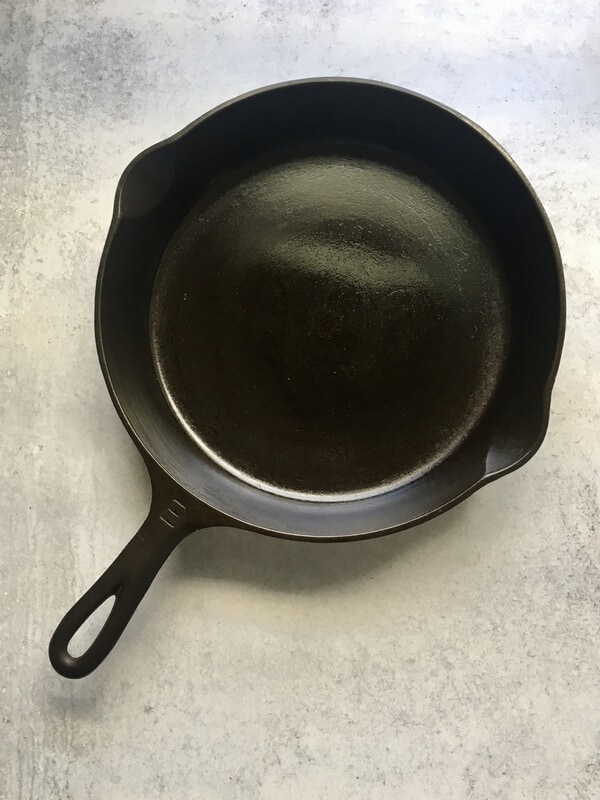
The Science Behind Cast Iron Seasoning
The actual “seasoning” on your cast iron cookware is developed through a process called polymerization. Polymerization occurs when the right oil or fat is heated in a pan at high enough temperatures to form a hard black surface on your pan.
Certain fats are better for polymerization, which is why it’s important to choose the right oil for seasoning your cast iron.
Why is Seasoning Cast Iron Important?
Before we get into the best oil for seasoning cast iron, let’s talk about WHY the seasoning process is so important.
The whole purpose of seasoning cast iron is to protect the surface of the cast iron piece from rust, and to make it become nonstick and versatile. A properly seasoned cast iron pan can be used to bake a cake, sear a steak, and make the best over easy eggs, and you shouldn’t need to do any sort of scraping to remove stuck-on food afterwards.
Seasoning cast iron can also save you money! Unlike Teflon or other nonstick pans, the surface of your cast iron can be “fixed” so that you don’t need to buy a new pan every time that your seasoning scrapes off. The seasoning on cast iron is renewable, meaning that when your pan starts to develop spots where your food sticks, you can just apply a fresh layer of seasoning to extend the life of the pan.
What Makes a Great Cast Iron Seasoning Oil?
When choosing an oil to season cast iron, there are a few factors that you need to consider:
High Smoke Point
An oil’s smoke point is important, because that is the temperature at which the oil starts to smoke and break down. The most effective temperatures for seasoning cast iron are between 400-500 degrees, so you need an oil with a high smoke point to withstand those temperatures.
Also, if you cook at high temperatures, like for instance when you sear the perfect steak in your cast iron skillet, you will want to use a seasoning oil with a higher smoke point.
A good rule of thumb is to always choose a seasoning oil with a higher smoke point than the temperatures that you will be using for cooking. For instance, if you’ll be using your skillet to sear at a temp of 400 degrees, don’t choose an olive oil with a smoke point of 350 degrees to season your skillet.
Higher Concentration of Unsaturated Fat
Unsaturated fats have a chemical makeup that is more optimal for polymerization, the process that needs to occur to develop the perfect cast iron seasoning. So steer clear of oils with a higher concentration of saturated fats, like coconut oil and palm oil.
Neutral Flavor
You don’t want the food that you are cooking in your cast iron skillet to take on the flavor of the oil you used for seasoning, so look for an oil that is neutral in flavor.
Also, a neutral flavor oil is going to be more versatile. So instead of spending money on an oil that can only be used for one purpose, you can buy a good multipurpose neutral flavor oil that can be used for making salad dressings, sautéing vegetables, AND seasoning your cast iron. To me, that’s bang for your buck.
Affordability
You don’t need to spend a fortune to buy a good cast iron seasoning oil. In fact, my two favorites are less than $9 for 16 ounces. And if you use your cast iron cookware frequently, then you’ll probably want a more affordable seasoning oil.
What Cast Iron Seasoning Oil Do the Manufacturers Recommend?
There are 4 main cast iron cookware manufacturers, and their recommendations for the best oil to season cast iron are pretty similar. Let’s take a look:
| Cast Iron Manufacturer | Recommended Seasoning Oil |
|---|---|
| Field Company | “We recommend using grape seed oil for oven seasoning.” |
| Lodge Cast Iron | “Based on availability, affordability, effectiveness, and having a high smoke point, Lodge recommends vegetable oil, melted shortening, or canola oil.” |
| Smithey Ironware | “We use a pure grape seed oil to season our skillets. However, any off-the-shelf vegetable oil or shortening will do just fine as a seasoning oil.“ |
| Stargazer Cast Iron | “We recommend using an oil with a high smoke point such as canola, grape seed or sunflower.” |
So, as you can see, the general consensus is grape seed oil, but overall the smoke point of the oil and the types of fats they contain are the most important factor when choosing the best oil for seasoning cast iron. You can go here to read more about different cooking oils and their smoke points.
The BEST Oil for Seasoning Cast Iron – My Favorites!
Avocado Oil
Smoke point: 500-520 degrees
I’m listing avocado oil FIRST, because it is the best oil for seasoning cast iron, in my opinion! Just be sure to look for a refined avocado oil, because the smoke point will be much higher (around 500-520 degrees) than an unrefined version.
The avocado oil that I have been using for YEARS is by Better Body Foods, and it has a smoke point of 500 degrees. I get it on Amazon for about $8.00 per bottle, so it is a fairly good value.
I also prefer the avocado oil for seasoning cast iron because of its versatility. I don’t like to spend money on cooking products that only have ONE use, and avocado oil is neutral in flavor and a healthier oil, so I use it in all of my cooking. I even use it to season and maintain my Camp Chef flat top grill.
Crisco Solid Shortening
Smoke point: 490 degrees
Crisco solid shortening is a popular cast iron seasoning oil because it is versatile, affordable, and widely available in grocery stores. The solid Crisco shortening (the kind that comes in a metal tub) also has a high smoke point of 490 degrees.
When I first started out with cast iron, I used Crisco exclusively to season my pans, and it worked great. I only made the switch to avocado oil because of the health benefits and versatility. But if you’re looking for the best AND cheapest oil for cast iron seasoning, then you can’t go wrong with Crisco.
Grape Seed Oil vs. Avocado Oil
As mentioned above, 3 out of the 4 cast iron manufacturers recommend grape seed oil…. so why do I prefer avocado oil? Let’s take a look at the chemical compounds and health benefits of each:
| Oil Characteristics | Avocado Oil | Grape Seed Oil |
|---|---|---|
| Smoke Point (refined versions) | 520 degrees | 420 degrees |
| Fatty Acid Composition: | ||
| Saturated Fat | 12% | 10% |
| Monounsaturated Fat | 70% | 16% |
| Polyunsaturated Fat | 13% | 70% |
| Flavor | Mild | Mild |
| Average Price Per Oz | $0.40/oz | $0.25/oz |
Health Benefits
In recent years, the health benefits and effects of heating grape seed oil have come into question.
Grape seed oil has been touted as a “healthy oil” for years because of its high levels of omega fats. However, some grape seed oils may also contain “potentially harmful levels of polycyclic aromatic hydrocarbons (PAHs), which are known to cause cancer in animals.” (Healthline.com)
Overall, research on the effects of grape seed oil on your health is lacking, so you’ll need to form your own educated opinion on this one.
Heat Resiliency
As you can see from the table above, the main difference between avocado and grape seed oil is the fatty acid composition. Grape seed oil contains a high concentration of polyunsaturated fat, while avocado oil has a higher concentration of monounsaturated fat… but why does that matter?
It all comes down to the degradation when heated.
Polyunsaturated fats like those found in grape seed oil have been found to produce toxic compounds (including those that cause cancer) when heated. Saturated and monounsaturated fats, on the other hand, are more resistant to heat degradation.
Both oils contain a high concentration of unsaturated fats, which are better for polymerization than saturated fats, but given that the jury is still out on heating polyunsaturated fats, I’ll just stick with my trusty avocado oil.
Bottom line, you use your own judgement when choosing the best cast iron seasoning oil for you.

Other Fats and Oils for Seasoning Cast Iron
While avocado oil and Crisco are my favorites, it all comes down to personal preference. In fact, opinions on which oil to use are as varied as the oil choices themselves. One cast iron fanatic will tell you to only use bacon fat (and why you’re dead wrong if you don’t!), while another “guru” will swear by flaxseed oil and shun anyone that thinks differently. Ultimately, it all comes down to what works best for you.
Here are some other popular oils for seasoning cast iron:
Vegetable and Canola Oil
Smoke point: 400-450 degrees
We only use vegetable and canola oils for deep frying and baking cakes and brownies, but many people use these oils to season cast iron. Even Lodge’s own Seasoning Spray Oil is made of 100% canola oil. The relatively low price and decent smoke points of these oils make them popular choices, but there are better seasoning oils out there, in my opinion.
Flaxseed Oil
Smoke point: 225 degrees
Flaxseed oil may be recommended by some cast iron “gurus” because it is considered a “drying oil”, meaning that it “dries hard” to cast iron, but I would not recommend it for seasoning.
First, it’s on the expensive side. Second, the more widely available unrefined version has an extremely low smoke point. Third, you have to be careful to choose the correct variety, as many people complain that certain flaxseed oils will flake off after seasoning. You definitely don’t want to go through the multistep process of seasoning your cast iron pan only to have all of that hard work just flake off, so this oil is low on my list.
Olive Oil
Smoke point: 465 degrees for light/refined, 325-375 degrees for extra virgin
Olive oil is another popular choice for seasoning cast iron because most people probably already have it in their pantry. However, extra virgin olive oil has a relatively low smoke point, so heating it to higher temperatures will cause it to break down and turn rancid. If you are going to use olive oil, look for a light or refined version, but there are still better options.
Olive oil may be great for making salad dressings, but I would NOT recommend it for seasoning cast iron.
Bacon Fat and Lard
Smoke point: about 370-375 degrees
Bacon fat and lard have been used for seasoning cast iron for decades, probably because that was the only thing available. When our great grandparents were cooking with cast iron, they couldn’t just go out to their backyard and pick a dozen avocados to expel oil from. And they definitely couldn’t just add a bottle of specialty oil to their Amazon cart.
So animal fat was king. And while there’s nothing wrong with using bacon fat and lard for seasoning cast iron, it was widely used by chuckwagon cooks for decades, the high levels of saturated fats do not create the optimal conditions for polymerization. Plus, modern technologies have brought us much better options.
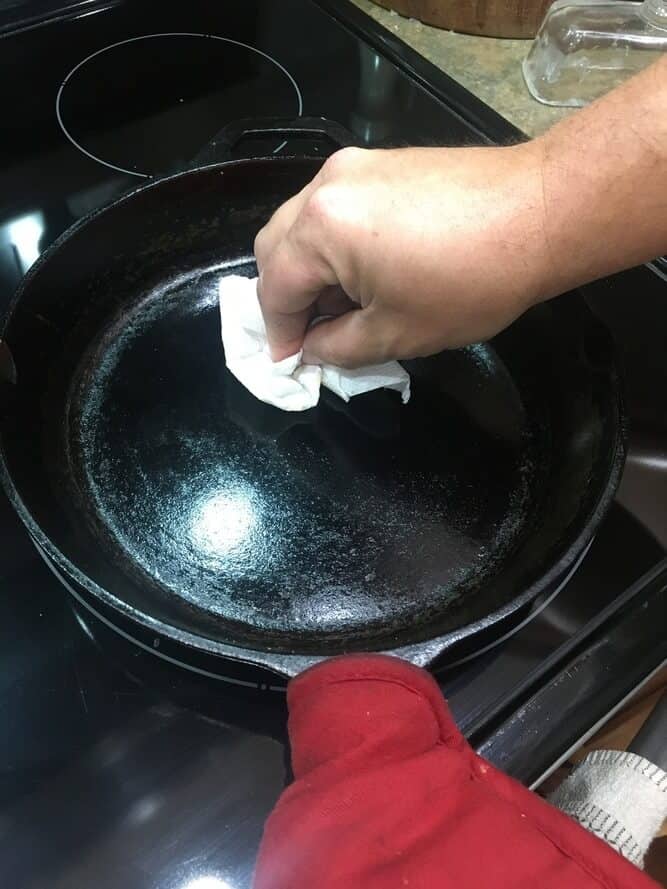
What NOT to Use for Cast Iron Seasoning
Coconut Oil
While the popularity of coconut oil is on the rise because of its health benefits, it should NOT be used for cast iron seasoning. Coconut oil has a super high concentration of saturated fats, making it difficult for the polymerization process to occur. In fact, if you choose to use coconut oil, you will probably find that your seasoning will not be near as durable as other oils.
Bottom line, use coconut oil to moisturize your skin, NOT to season your skillet.
Butter
Every household probably has butter, and you can even buy it in some gas stations. But just because it’s readily available and cheap, doesn’t mean that you want to season your cast iron with it.
Butter is high in saturated fats, which remember are not as good for the polymerization process, and it burns at about 250-300 degrees. In fact, how many times have you heard someone say that if you’re going to cook with butter in your skillet, then you also need to add some oil to raise the smoke point and prevent the butter from burning. Case closed.
In Conclusion
In conclusion, oil and cast iron cookware go together like peanut butter and jelly… you can’t have one without the other. And since selecting the right oil is such an important part of the cast iron seasoning process, you need to do your research.
Science tells us to look for oils with higher concentrations of unsaturated fats and high smoke points. I personally have had great success with avocado oil and Crisco solid shortening, but the choice is yours. Just be sure to apply very thin layers of whichever oil you choose, and heat your pan past the oil’s smoke point.






Great article! So you do not recommend coconut oil for initial seasoning. I would imagine you do not recommend using it for cooking with it either in a cast iron pan? Maybe I can use the coconut oil later once the seasoning in the pan is great?
Thank you
ok. day one and we’ll see how it goes. I’m getting a sticky feel on my old seasoning but I don’t use hardly any oil. probably less than you. going with avocado oil and doing it 4 times. I’ll be back..
You don’t really need to worry about the health benefits of the oil you season with because it’s not going to get into your food at any amount worth noting. It’s stuck in a layer between the food and the pan.
Canola oil is bad. First thing, there is no such thing as a canola pant! Canola oil is processed from the “Rape Seed Plant!” My daughter learned that in medical school and she is a licensed doctor. Canola oil over time can destroy the protective coating on Neurotransmitter.
A neurotransmitter is a signaling molecule secreted by a neuron to affect another cell across a synapse. The cell receiving the signal, or target cell, may be another neuron, but could also be a gland or muscle cell
“Neurotransmitter imbalance”
Hello – Merry Holidays;
Can you season cast iron skillet with Mineral Oil ( Reasoning: no rancid & or sticky upon not using pan for a few months.)
– enough to aid in the Polymerization effect over time…
– suggestion to manually smooth out C I Skillets that come from Mfg’s rough interior surface / that seems to be impossible to aquire that perfect polymer stick resistant black coating w/ Mineral oil being used…
***. Thoughts / advice appreciated. Thanks
Suggestion to sites that might have some science backed data , opinions? Helpful to increase knowledge base too.
Be well !
how do you season it
how much – how long – what temp – food or no food ?
I was given a bottle of Pecan Oil. The smoke point is 470°F. It is 52% monounsaturated oils and only about 12% saturated fats (wiki).
Is it suitable for seasoning cast iron skillets?
Thank you
Nice article. Like you, I exclusively use avocado oil. I have not seen your “rust removal” article but noticed it mentioned several times that a lye bath is common or recommended so thought I’d share my method. I use a rust removal grinding disk on a portable drill. After rust is removed ~2 minutes or less, I smooth out the surface with a 400 grit sanding ball…. Again 2 minutes. This method actually turns the black cast iron silver. To season I heat pan on stove top between 200`300 degrees and apply a thin layer of avocado oil then oven @400 for an hour. I remove from oven and apply another thin coat and back in oven for another hour. This process actually turns the silver pan a beautiful gold color as the oil poylermizes. Over easy eggs are now a breeze on the gold colored seasoning, and the clean up is simply a wipe down with a paper towel.
Lye (or oven cleaner) should only be used to strip seasoning and burnt/caked on residue. Vinegar will remove light to moderate rust. Just soak the pan in vinegar for about 30 minutes. The rust should lift off. Then season the pan again.
I have a large collection of cast iron, and have been using eather veg oil or crisco shortening. My question to you ( and I think you should share your answer ) is , if I want to switch up to the avicado oil will I have to remove the current seasoning or can I apply the avicado layer over it ? Your video was very help full thank’s .
“Just be sure to apply very thin layers of whichever oil you choose, and heat your pan past the oil’s smoke point.”
Shouldn’t that read “…and DON’T heat your pan past the oil’s smoke point”? Or if it was correct as written, why and when should we heat the pan past the smoke point?
OK so now reading some of the other comments, I’m wondering if I’m supposed to heat my cast-iron past the oil smoke point BEFORE I then season it. Is that correct? This isn’t a new pan, I’ve been using it for a number of years and I’ve probably been seasoning it with the wrong oil, but now I’m wondering if I’ve also been seasoning it improperly by only getting it warm enough for the oil to melt into the cast-iron.
So I guess the other question now is: after I use the pan and it’s time to season it before I put it away for the next use, do I heat the pan in the oven past the oil’s smoke point, then take it out and carefully season it with my Crisco or avocado oil?
No, I think he meant to put “don’t”…. There really isn’t a good discussion of what temp the polymerization occurs vs the smoke point, and that’s the only think I see lacking here. The polymerization will occur below the smoke point.
You actually shouldn’t need to fully re-season after cooking and even after cleaning it. You shouldn’t be scrubbing out the seasoning every time. Just use a soap and wipe the pan clean, then what we do is put it on the stove for a few minutes to evap away moisture. If it needs a little more oil, you can do it right before you cook again, and it’ll season a little bit on the stove before you start adding food. Hope this helps. These pans are supposed to be low on maintenance. 🙂