


Master the ultimate Blackstone breakfast with these 6 classic griddle recipes – pancakes, bacon, eggs, hash browns, omelettes, and French toast – plus pro tips for each.
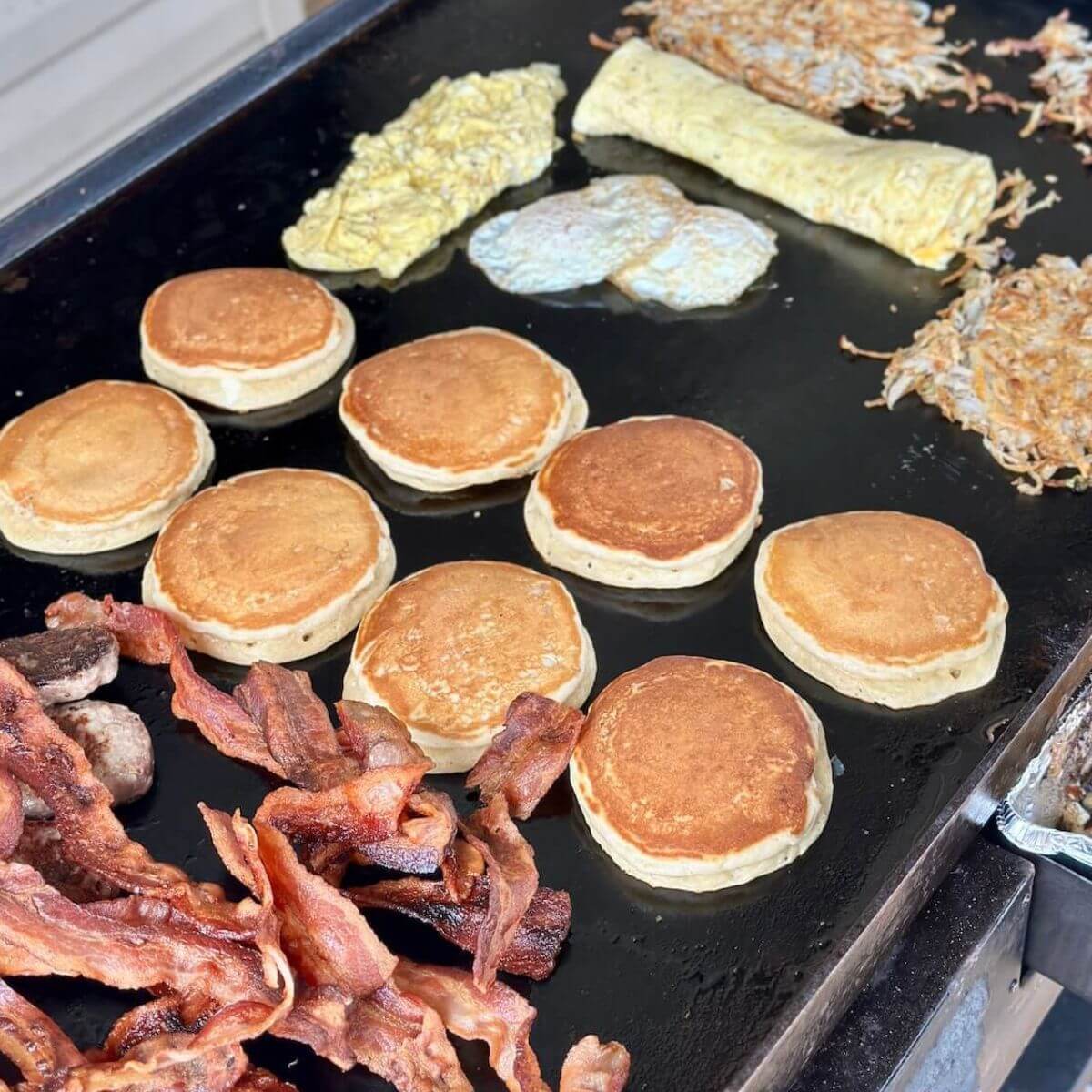
Let’s be honest – most of us didn’t buy a Blackstone to make one burger at a time. We bought it for the big Saturday morning breakfast spread. You know the one: pancakes stacked six high, bacon sizzling in one corner, hash browns crisping up in another, and perfect scrambled eggs that would put your neighborhood diner to shame. That’s the griddle breakfast dream, and it’s exactly why breakfast is one of the very first things I tell new griddle owners to try.
If you’re new to griddle cooking, breakfast foods are actually the perfect place to start. They’re forgiving, they’re quick, and cooking a full spread will teach you more about your griddle’s hot and cold zones than almost anything else you could make. So before you graduate to smash burgers and fried rice, here are the six classic Blackstone breakfast foods every beginner should master first – plus our best tips for nailing each one.
Video
If you’re more of a visual learner, then this video from our YouTube channel is a great place to start – tons of tips and times for making a big breakfast on the Blackstone griddle:
Griddle Scrambled Eggs
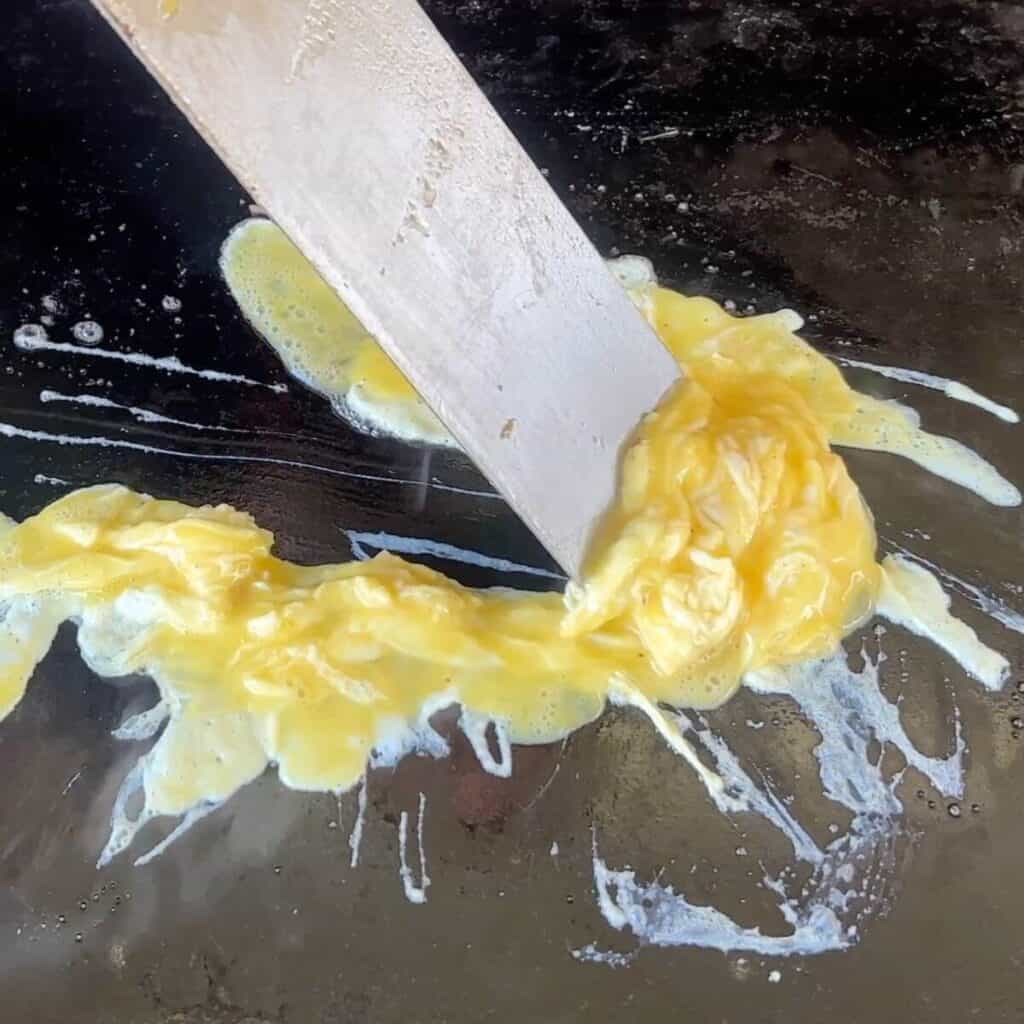
Eggs are simple, but they’re also the food that trips people up most when they’re new to griddle cooking. After testing water, milk, and heavy cream against a plain butter method, our conclusion for the best griddle scrambled eggs was clear: skip the extra liquids and just add butter.
A few tips to get you started:
- Pull them off just before they look done. Eggs keep cooking from residual heat even after you take them off the griddle.
- Keep the temperature low, around 275-325°F. Eggs cook fast, and a griddle that’s too hot will brown them before they ever get creamy.
- Use the butter test. If a pad of butter starts smoking or browning immediately, your griddle is too hot for eggs.
- Pull, don’t chop. Use your spatula to gently pull and fold the eggs across the surface rather than choppy stirring – it creates soft layers instead of dry crumbles.
- Cook in smaller batches. Four to six eggs at a time is much easier to control than a huge pour that runs all over your griddle. Or if you’re cooking Blackstone scrambled eggs for a crowd, then pour about half of the beaten eggs on the griddle, use your spatula to sort of “dam up” the outer edges so they don’t run everywhere, and then continue pouring.
Homemade Pancakes on the Griddle
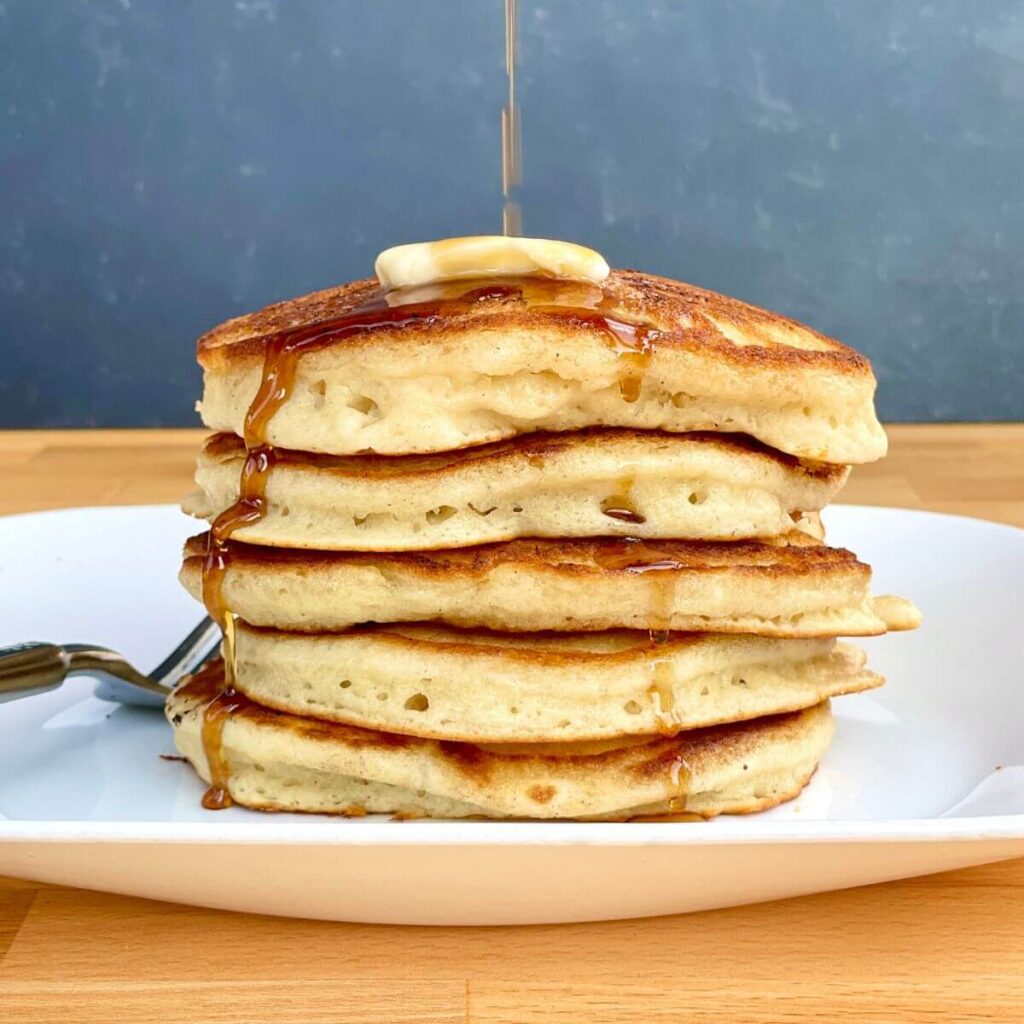
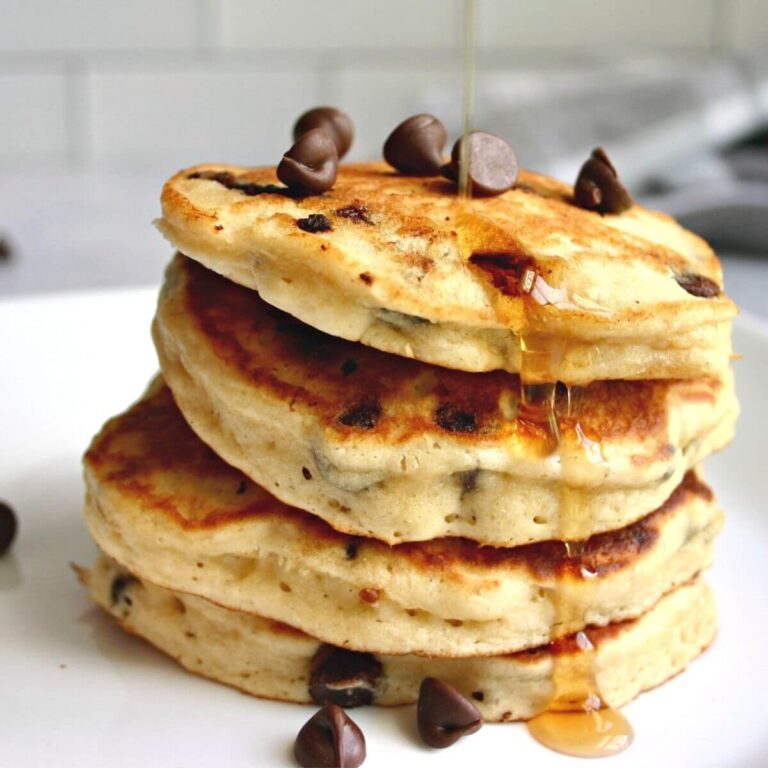
Pancakes are the perfect food for beginner griddle owners to make. They’re cheap, hard to mess up, and a big batch cooks in a fraction of the time it would take in a skillet inside. We’ve tested close to a dozen batches to land on our favorite homemade pancake recipe, and it’s become one of our most-requested breakfasts.
A few tips to get you started:
- Use a spoon, not the fancy batter dispenser. A simple spoon disturbs the batter less, which means fluffier pancakes.
- Get your griddle to 375°F. Much cooler and your pancakes come out thin; much hotter and the bottoms burn before the inside sets.
- Don’t overmix the batter. Mix your wet and dry ingredients separately, then gently fold them together. Lumpy batter is good batter.
- Go easy on the butter. It’s tempting to lubricate the griddle heavily, but too much butter makes pancakes spread out and go flat. A very thin layer gives you that classic thick, fluffy shape.
Griddle Bacon
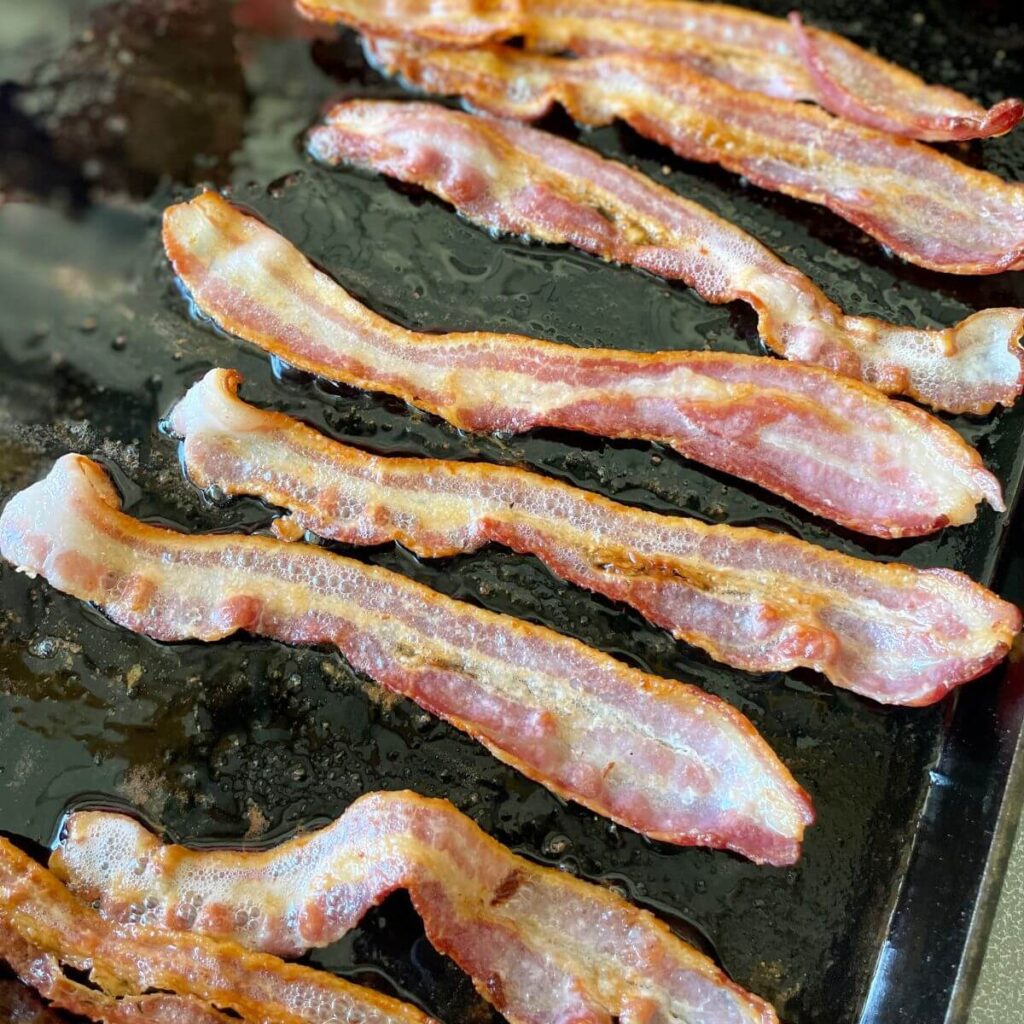
The Blackstone griddle is hands-down the best apparatus for cooking bacon. The griddle keeps the grease smell out of your kitchen, and the flat surface means you can cook a couple of pounds at once instead of babysitting a skillet in batches.
A few tips to get you started:
- Watch for hot and cold zones. The edges of your griddle often run cooler than the center, so you may need to shuffle strips around as they cook to make sure everything finishes evenly.
- Preheat to 375-425°F and don’t stress too much about hitting an exact number – bacon is forgiving.
- Check your grease trap before you start. Bacon renders a lot of fat fast, so make sure your grease cup is clean and properly seated before you lay down a single strip.
- Cook until about halfway done, then flip once. No need to flip it over and over.
Blackstone Hash Browns
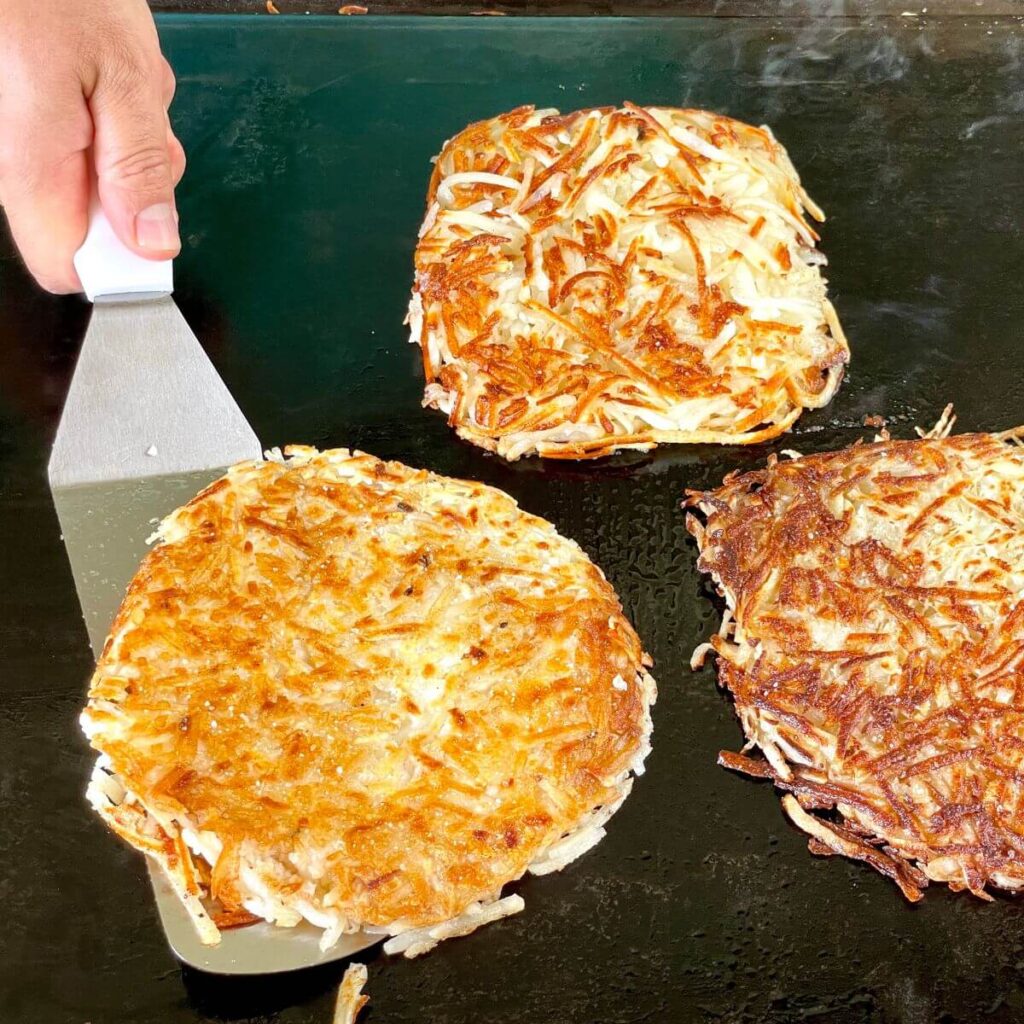
Crispy hash browns take a little more patience than the other griddle breakfast recipes, but they might be the most rewarding payoff on this whole list. After testing raw, refrigerated, frozen, and dehydrated potatoes side by side, we found that bagged refrigerated shredded hash browns gave us the crispiest, best-textured results with the least amount of prep work – though every type can work if you prep it right.
A few tips to get you started:
- Be patient. Expect up to 10 minutes per side for truly crispy hash browns, depending on your griddle and the type of potato you’re using.
- Dry your potatoes well before they hit the griddle. Moisture is the enemy of crispiness – squeeze out excess liquid with a clean towel or cheesecloth first, especially if you’re using fresh raw potatoes or frozen hash browns.
- Cook at 400-425°F, hot enough to crisp but not so hot they burn before cooking through.
- Don’t skimp on the oil or butter, and add fresh butter to the top before you flip so both sides get equally crispy.
- Let them cook undisturbed. Resist the urge to move or flip them constantly – direct, uninterrupted contact with the griddle is what builds that crispy crust.
Griddle Omelettes
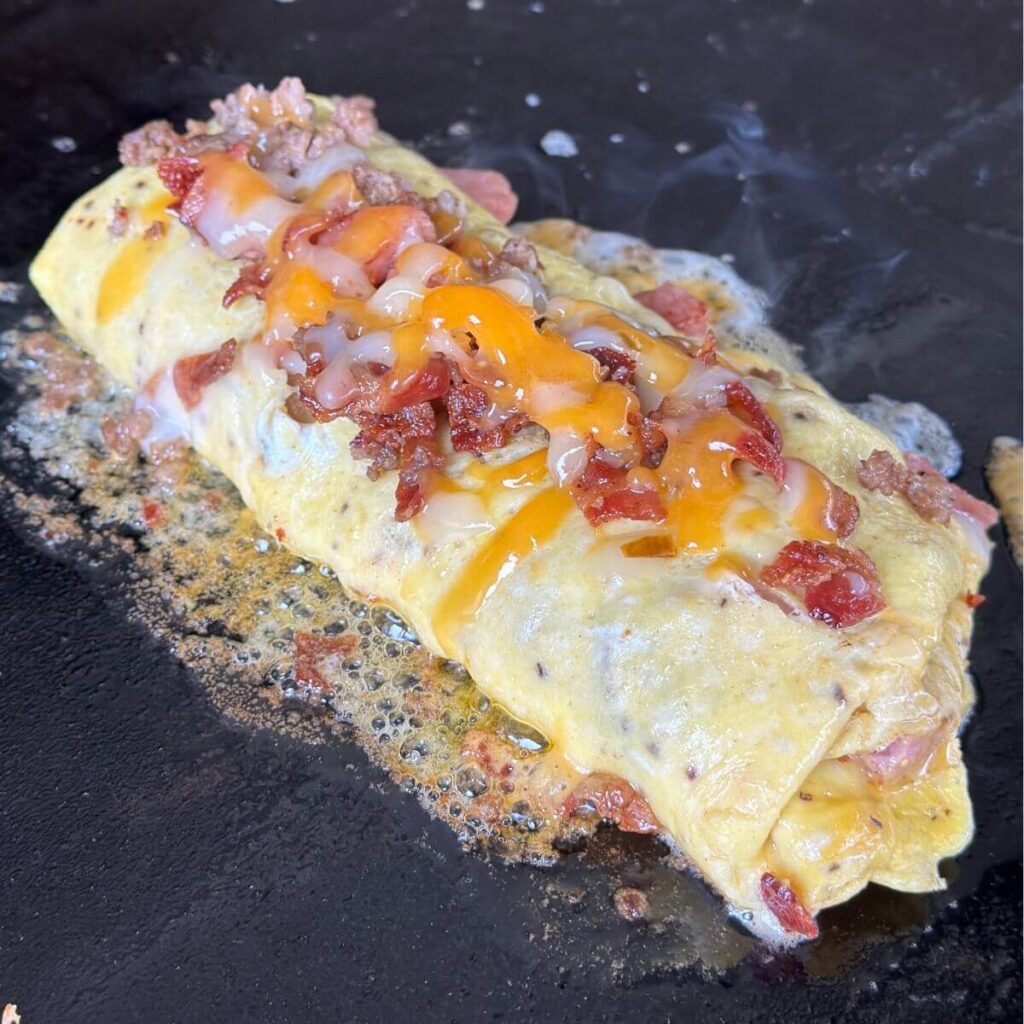
Once you’ve got eggs and breakfast meats down individually, the omelette is the natural next step. This one is loaded with bacon, sausage, and ham, plus a mix of cheddar and pepper jack, and it’s become one of our favorite Blackstone breakfast recipes for good reason – it’s essentially a customizable way to use up whatever breakfast meats you’ve already got cooking.
A few tips to get you started:
- Add a melting dome near the end if you want the eggs to set up faster and the cheese to melt through completely.
- Cook your meats first, then scrape the griddle clean. Eggs stick to leftover fond and grease, so a clean surface is essential before you pour.
- Drop the temp to 300-350°F for the eggs. This is cooler than what you’d use for the meats, so plan to turn a burner off or add a squirt of water to bring the temperature down.
- Don’t pour the eggs too thin, or your omelette will tear when you try to fold it.
- Fold, then roll. Fold the two short ends in first, then use your spatula to roll the omelette over on itself rather than trying to flip it like a pancake.
Classic Griddle French Toast
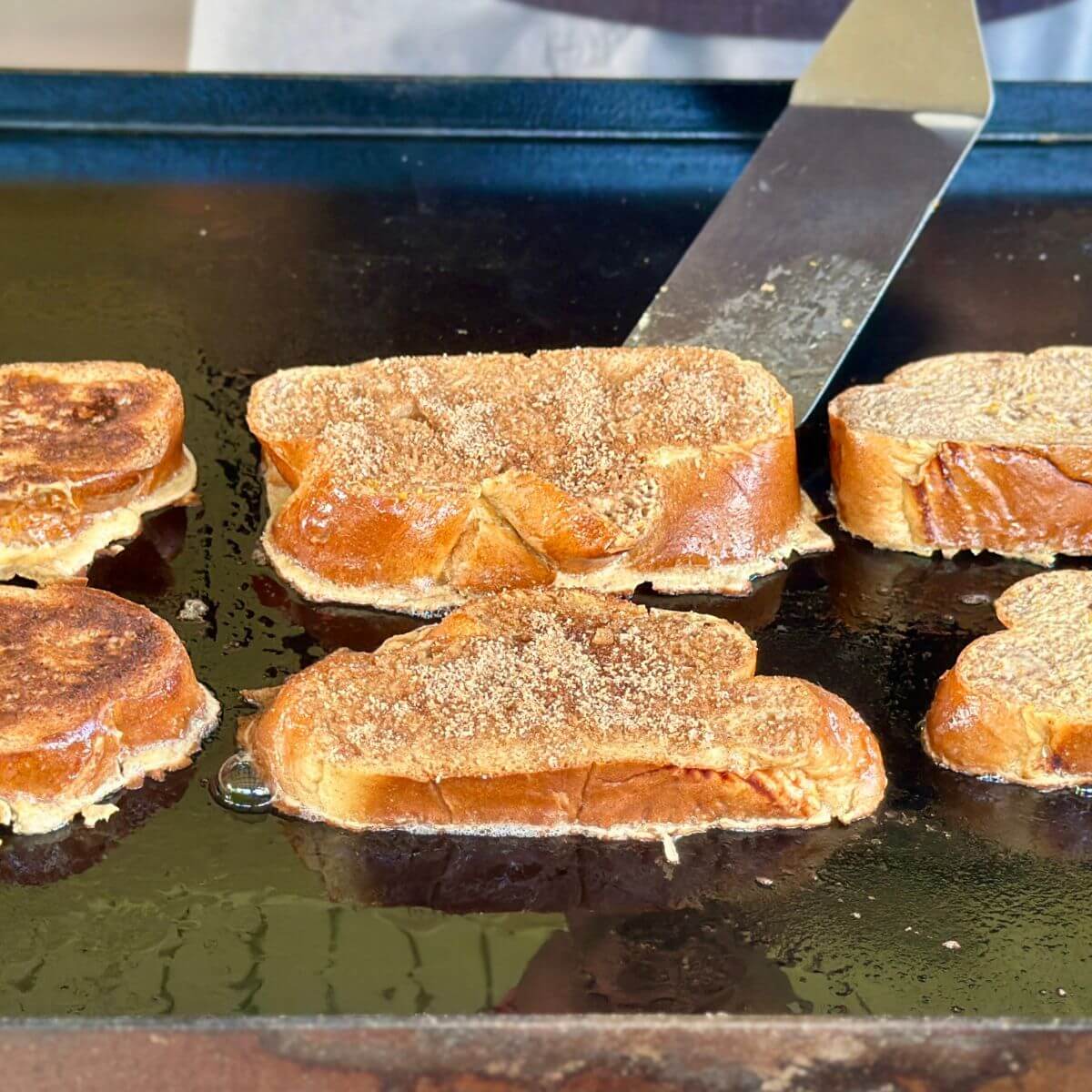
French toast is the one classic Blackstone breakfast food we somehow went years without covering – so when we finally did, we didn’t do it halfway. After testing four types of bread, different soak times, and a handful of custard variations, we landed on challah as the clear winner, plus a genuinely game-changing cinnamon sugar trick.
A few tips to get you started:
- Challah is the best bread, hands down. It holds up in the custard without turning to mush and gives you those crispy, caramelized edges.
- Cook low and slow, around 350-375°F. French toast needs time to cook through without burning the outside, so resist the urge to crank the heat.
- Slice your bread thick – 1 to 1.5 inches – for the best texture and to give the custard something substantial to soak into.
- Try the cinnamon sugar crust. Sprinkle a mix of white sugar, brown sugar, and cinnamon on top right before you flip. It caramelizes against the hot griddle and gives you a crackly, almost crème brûlée-style crust.
- Let finished pieces rest on a wire rack, not stacked flat on a plate, so steam doesn’t turn your crispy edges soggy.
General Blackstone Breakfast Tips
Before you fire up the griddle for your first big breakfast spread, a few basics from our full beginner’s guide to the Blackstone griddle will make the whole morning go smoother:
- Keep your griddle seasoned. A properly seasoned surface is what keeps eggs and pancakes from turning into a sticky mess, so don’t skip this step if you’re new to griddle ownership.
- Prep everything before you turn the griddle on. Griddle cooking moves fast once the surface heats up, so have your ingredients, plates, and tools ready to go nearby.
- Preheat for 10-12 minutes on low. Most breakfast foods don’t need a screaming hot griddle, and low heat is usually enough once the surface has had time to build up heat.
- Know that temperature isn’t uniform across the surface. It’s common to see a 50-75 degree difference between the edges and the center of your griddle, even with every burner set the same. Use that to your advantage by cooking delicate items like eggs in the cooler zones, or moving foods that are done cooking, like your bacon, to the edges to keep warm.
- Cook in the right order. Start with the foods that hold up well once they’re done (bacon, sausage, hash browns) and finish with eggs last, since they’re best served immediately.
- Turn the griddle down or off for the last item. If you’re cooking eggs after a big spread of bacon and hash browns, you can often turn the burners off and let the residual heat finish the eggs while the surface cools.
Master the Classics First
Pancakes, bacon, scrambled eggs, hash browns, omelettes, and French toast — these six recipes are the foundation of every great Blackstone breakfast spread, and once you’ve got them down, you’ll have the confidence (and the griddle skills) to tackle just about anything else on the menu. So grab your spatula, invite the family out to the back deck, and get cooking!




Get More Griddle Recipes!
Follow The Flat Top King on YouTube for more recipes and tips for mastering your griddle!